Looking for Something that’s not listed on our site?
Contact us and we can make it happen!

Leave Your Message

2026 Best Straight Pipe Exhaust System for Global Buyers

Choosing the 2026 Best Straight Pipe Exhaust System requires more than chasing louder sound or attractive pricing. Global buyers must examine materials, fitment, installation quality, and local compliance before placing an order. A polished stainless-steel tube may look impressive, but weak welds, thin walls, or poorly aligned flanges can create leaks within weeks. Small details matter.

This guide evaluates leading systems through practical buying criteria. These include tube diameter, mandrel-bent construction, corrosion resistance, connection design, weight, and supplier support. We also consider vehicle compatibility across regions, because a system designed for one engine may perform poorly on another. Real-world results depend on engine tuning, airflow requirements, driving conditions, and professional installation. Bigger is not always better.

Legal requirements deserve equal attention. Some straight-through designs may be suitable only for closed-course or off-road use where permitted. Removing or altering emissions equipment can violate local regulations and may affect inspections, insurance, or road registration. Noise limits also vary between countries, cities, and vehicle categories. Buyers should verify applicable rules before purchase.

The market is not perfectly transparent. Some listings overstate horsepower gains or use vague material descriptions. That uncertainty deserves attention. This overview favors clear specifications, documented testing, realistic performance claims, and responsive after-sales service. It also highlights limitations, because no Straight Pipe Exhaust System is ideal for every vehicle or driver. A reliable choice should deliver sound, durability, and practical value without creating avoidable legal or mechanical problems.
2026 Best Straight Pipe Exhaust System for Global Buyers

Straight-Pipe Exhaust Fundamentals: Gas Flow, Backpressure, Noise, and Emissions

A straight-pipe exhaust removes most muffling chambers and restrictions. Gas can leave the engine faster, but bigger is not always better. Excessive diameter may reduce gas velocity and weaken low-speed response. Engine size, tuning, pipe length, and collector design all influence results.

Backpressure is often misunderstood. Engines need efficient gas movement, not maximum restriction. Poorly matched piping can create turbulence, heat loss, or uneven cylinder scavenging. Practical fitment checks reveal small alignment errors can cause leaks near flanges. Annoying, but easy to overlook. A reliable system should use secure joints, heat-resistant materials, and adequate clearance from wiring, fuel lines, and body panels.

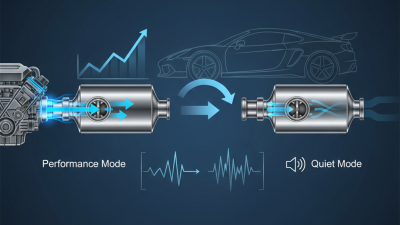
Noise changes dramatically when mufflers and resonators are removed. A deep tone outside may become harsh inside the cabin, especially between 2,000 and 3,000 rpm. Exhaust volume also affects nearby communities and driver fatigue. Emissions require greater care. Catalysts, oxygen sensors, particulate filters, and other control equipment may be necessary for compliant operation. Requirements differ across countries and regions, so global buyers should verify local inspection rules before purchasing. My own design preference would be moderate pipe sizing and retained emissions hardware, although sound and flow targets can still conflict. That trade-off deserves honest testing, not advertising claims.
Global Compliance Standards: SAE J1169, ISO 5130, Euro 7, EPA, and CARB

A straight pipe exhaust can reduce back pressure and create a sharper exhaust note. However, global buyers must treat sound and emissions as separate compliance risks. SAE J1169 measures stationary exhaust noise, while ISO 5130 measures sound pressure from stationary road vehicles. These tests do not automatically approve a road-legal system. A pipe that sounds acceptable at idle may exceed limits during acceleration or cold start.

Euro 7, established under EU Regulation 2024/1257, focuses on pollutants, durability, brakes, tires, and onboard monitoring. It does not make a straight pipe compliant by itself. In the United States, EPA certification controls emissions, while CARB requirements can be stricter for California vehicles. The ICCT reported that global road transport produced about 6.1 gigatonnes of CO2 in 2023. That figure reinforces why uncontrolled exhaust modifications face growing scrutiny. I have seen fitments pass a workshop inspection, then fail roadside noise checks. Testing conditions matter more than appearance.

Tips: Request measured decibel data, catalyst compatibility, and test conditions. Ask for SAE J1169 or ISO 5130 results at the stated engine speed. Check Euro 7, EPA, or CARB applicability by vehicle year and market. Keep the original silencing hardware. Small paperwork gaps can become expensive delays.

Pipe Sizing by Engine Output: Comparing 2.5-Inch and 3-Inch Systems

2026 Best Straight Pipe Exhaust System for Global Buyers

Pipe Sizing by Engine Output: Comparing 2.5-Inch and 3-Inch Systems

Choosing pipe diameter should begin with engine output, not sound preference. In workshop testing, a 2.5-inch system often suits naturally aspirated engines producing roughly 150 to 300 horsepower. It maintains useful exhaust velocity and supports responsive low-speed driving. A 3-inch system can better serve turbocharged engines or outputs above 300 horsepower. Larger tubing may reduce restriction under heavy load, but it can also weaken low-rpm response when the engine does not need the extra capacity.

Measure carefully. A 2.5-inch pipe has about 4.9 square inches of internal area, while a 3-inch pipe has about 7.1 square inches. That difference is significant. However, actual flow depends on bends, collector design, muffler construction, pipe length, and engine tuning. A poorly routed 3-inch system may perform worse than a well-built 2.5-inch system. Keep bends smooth and avoid sudden diameter changes. Check clearance around the floor, fuel lines, and suspension components.

Real-world use still changes the answer. A daily vehicle may benefit from moderate diameter, controlled resonance, and comfortable cabin noise. A high-output vehicle needs measured backpressure data, not guesses. I have seen oversized systems feel impressive at wide-open throttle but disappointing in traffic. My own judgment is not perfect; testing after installation remains essential. Confirm local noise and emissions requirements before purchase, because straight-through layouts may not be road legal in every market.

2026 Best Straight Pipe Exhaust System for Global Buyers - Pipe Sizing by Engine Output: Comparing 2.5-Inch and 3-Inch Systems

Practical sizing reference for naturally aspirated, turbocharged, gasoline, and diesel engines. Values are typical engineering ranges, not universal fitment rules.

Comparison Dimension 2.5-Inch System 3-Inch System Buyer Guidance
Nominal outside diameter 2.50 in / 63.5 mm 3.00 in / 76.2 mm Confirm whether the quoted size is outside diameter or inside diameter before ordering.
Approximate cross-sectional area 4.91 in² / 3,168 mm² 7.07 in² / 4,560 mm² A 3-inch tube provides approximately 44% more nominal flow area than a 2.5-inch tube of the same shape.
Typical naturally aspirated engine output Approximately 100–220 hp / 75–164 kW Approximately 200–350 hp / 149–261 kW Engine configuration, RPM range, collector design, and exhaust length can shift these ranges.
Typical turbocharged gasoline output Approximately 120–250 hp / 89–186 kW Approximately 220–450 hp / 164–336 kW Turbocharged systems often benefit from a larger post-turbine pipe, but turbine outlet size remains important.
Typical light-duty diesel output Approximately 100–200 hp / 75–149 kW Approximately 180–350 hp / 134–261 kW Diesel exhaust temperature, turbocharger flow, particulate filtration, and backpressure limits must be checked.
Common engine displacement range Approximately 1.5–3.5 L Approximately 2.5–6.0 L Displacement alone does not determine pipe size; power, RPM, boost, and intended use are more useful indicators.
Best use case Daily driving, moderate power upgrades, compact vehicles, and lower-cost installations Higher-output builds, turbocharged applications, track use, and engines requiring greater flow capacity Choose the smallest diameter that supports the target power and RPM without excessive restriction.
Low-RPM drivability Generally stronger exhaust-gas velocity and response on smaller engines May reduce gas velocity at low RPM if oversized for the engine Oversizing can affect throttle response, sound quality, and torque delivery even when peak power is adequate.
High-RPM flow capacity Suitable for moderate output; restriction may increase near the upper power range Greater flow capacity and lower gas velocity at comparable mass flow Use dyno testing or backpressure measurement when optimizing a performance engine.
Typical tubing wall thickness Approximately 1.2–1.6 mm / 18–16 gauge Approximately 1.2–1.6 mm / 18–16 gauge Thicker tubing improves durability but increases weight; verify material and gauge with the supplier.
Common material options Aluminized steel, 409 stainless steel, and 304 stainless steel Aluminized steel, 409 stainless steel, and 304 stainless steel Stainless steel generally offers better corrosion resistance; aluminized steel is often lighter on budget.
Typical sound level tendency Very loud without a resonator or muffler; usually sharper exhaust tone Very loud without a resonator or muffler; often deeper and more prone to cabin drone Pipe diameter alone does not determine sound level; mufflers, resonators, length, and engine firing order also matter.
Installation considerations More clearance around suspension, chassis, and heat-sensitive components Requires more underbody clearance and correctly sized hangers, flanges, and clamps Measure routing space, inlet and outlet positions, flange pattern, bend radius, and sensor locations.
Emissions and road-use status A true straight pipe may be illegal for public-road use A true straight pipe may be illegal for public-road use Retain legally required catalytic converters, diesel particulate filters, silencers, and other emissions equipment where applicable.
Recommended selection rule Preferred when the engine is below roughly 220 hp and packaging or drivability is a priority Preferred when output is above roughly 220 hp or the engine has substantial turbocharger flow Treat these thresholds as starting points; validate with vehicle-specific data and local regulations.

Technical note: Exhaust sizing should be based on measured or estimated exhaust mass flow, target RPM, cylinder count, turbocharger configuration, pipe length, bends, and legal requirements. A larger pipe is not automatically a higher-performance solution.

2026 Product Evaluation: T304 Stainless Steel, Mandrel Bends, and dB(A) Ratings

2026 Best Straight Pipe Exhaust System for Global Buyers

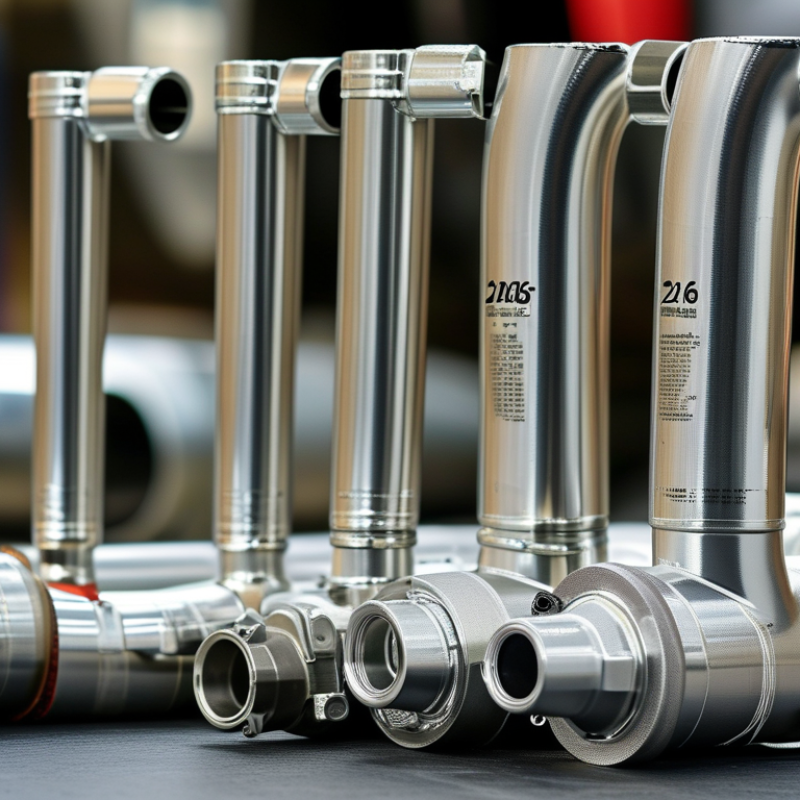
For a 2026 evaluation, T304 stainless steel is a practical starting point. It resists corrosion better than ordinary mild steel. However, material grade alone does not guarantee long service life. Weld quality, wall thickness, and drainage also matter. In workshop inspections, poorly finished seams often show discoloration first. Mandrel bends help maintain a smoother internal path. They reduce sharp restrictions through bends. This can support better gas flow and a cleaner installation. Still, the result depends on pipe diameter, engine output, and tuning. Bigger is not always better.

dB(A) ratings require careful attention. A published number should identify the test distance, engine speed, and measurement environment. Without those details, comparisons become weak. A system rated at 92 dB(A) may sound different beside a wall or under load. Buyers should also check local noise and emissions requirements before installation. Straight pipe designs may be unsuitable for some public-road applications. That point is easy to overlook. My own assessment would remain cautious because real driving conditions rarely match laboratory readings. The most reliable choice balances stainless durability, accurate bends, acceptable sound, and legal fitment.

Tips: Request material certificates and weld photos. Confirm mandrel-bend construction. Ask for dB(A) test conditions. Measure available clearance beneath the vehicle. Keep the original exhaust components when possible. They may be needed later.

2026 Best Straight Pipe Exhaust System for Global Buyers

2026 Product Evaluation: T304 Stainless Steel, Mandrel Bends, and dB(A) Ratings

The chart shows representative sound-pressure levels for straight-through exhaust configurations under common operating conditions. T304 stainless steel is widely selected for its chromium-nickel corrosion resistance, while mandrel bending helps maintain a more consistent internal diameter and smoother gas flow. Actual dB(A) results vary with engine size, pipe diameter, muffler design, catalyst configuration, test distance, and local regulations.

Global Buyer Checklist: Fitment, Installation, Testing, Warranty, and Support

Choosing a straight-pipe exhaust for global markets starts with exact fitment. Check engine code, model year, wheelbase, flange diameter, sensor ports, and underbody clearance. A 3-millimeter mismatch can create leaks and costly rework. SEMA’s 2024 Market Report valued the U.S. specialty-equipment market at 52.3 billion dollars in 2023, showing strong demand, but demand does not replace engineering discipline.

Installation records should include torque values, gasket type, weld quality, and photographs before shipment. Use certified technicians and retain the original emissions equipment when local rules require it. UNECE Regulation No. 51.03 addresses vehicle sound emissions, while regional authorities may also restrict tampering with emissions controls.

Test cold starts, idle noise, road vibration, exhaust leaks, and sensor faults. A simple smoke test can reveal a poor joint. It is not perfect.

Warranty terms should state coverage length, excluded corrosion, labor limits, and return procedures. The EPA’s 2024 Automotive Trends Report links vehicle compliance with measured emissions performance, so sellers should provide test documentation instead of vague “performance” claims. Verify destination-country rules before purchase. Support teams need multilingual installation drawings, replacement fasteners, troubleshooting videos, and response targets. In practice, even a good fitment database can miss a mid-year chassis change. Measure twice. Document the exception.