How to Choose the Best Straight Pipe Exhaust System for Your Car?
Choosing the right Straight Pipe Exhaust System for your car is essential for performance and sound. With various options available, it can be overwhelming. Not all systems are created equal, and the wrong choice can lead to dissatisfaction.
When selecting a Straight Pipe Exhaust System, consider your vehicle’s specifications. Compatibility is crucial for optimal performance. Pay attention to materials and design, as these factors influence durability. Some systems may look flashy but do not deliver on performance. Research user reviews and expert opinions to guide your decision.
Reflect on your goals. Is it a deeper sound you want, or is horsepower your focus? A Straight Pipe Exhaust System might not provide the best results for every situation. Sometimes, a more complex system may be better suited for your needs. Balance aesthetics with functionality for a rewarding upgrade.
Understanding the Basics of Straight Pipe Exhaust Systems
When considering a straight pipe exhaust system, it's crucial to understand its fundamental aspects. A straight pipe exhaust focuses on reducing back pressure in the system. This design allows for a more efficient flow of exhaust gases. With fewer bends and restrictions, these systems can enhance engine performance noticeably.
However, not all cars are suited for a straight pipe exhaust. Their loud sound might be too aggressive for daily driving. In some cases, it may lead to unwanted vibrations. The installation process also requires careful handling. It’s essential to measure clearances and alignments properly, or you might encounter fitment issues.
Researching local regulations is vital. Some areas have strict noise ordinances. This factor could influence your decision on exhaust modifications. Balancing performance upgrades with practicality is key. A straight pipe can boost power but may compromise daily comfort. Always weigh the pros and cons against your specific driving needs.
Key Factors to Consider When Choosing an Exhaust System
Choosing the best straight pipe exhaust system involves several important factors. Sound performance is a key consideration. A deeper growl can enhance your vehicle's presence. However, the noise level may not suit every driver. It’s crucial to choose a system that matches your style and comfort level.
Material quality also plays a significant role. Stainless steel is often favored for its durability and resistance to rust. Yet, keep in mind that not all stainless steel is created equal. Lower grades may not perform as well over time. Cost is another factor to weigh. High-quality systems are often pricier but can save you money on repairs in the long run.
Installation complexity varies with exhaust systems too. Some may require welding or cutting, which can be a hassle for DIY enthusiasts. Others might offer a bolt-on option, simplifying the process. Always consider your mechanical skill and tools available. Each of these factors can profoundly influence your choice, and it’s essential to reflect on what matters most to you.
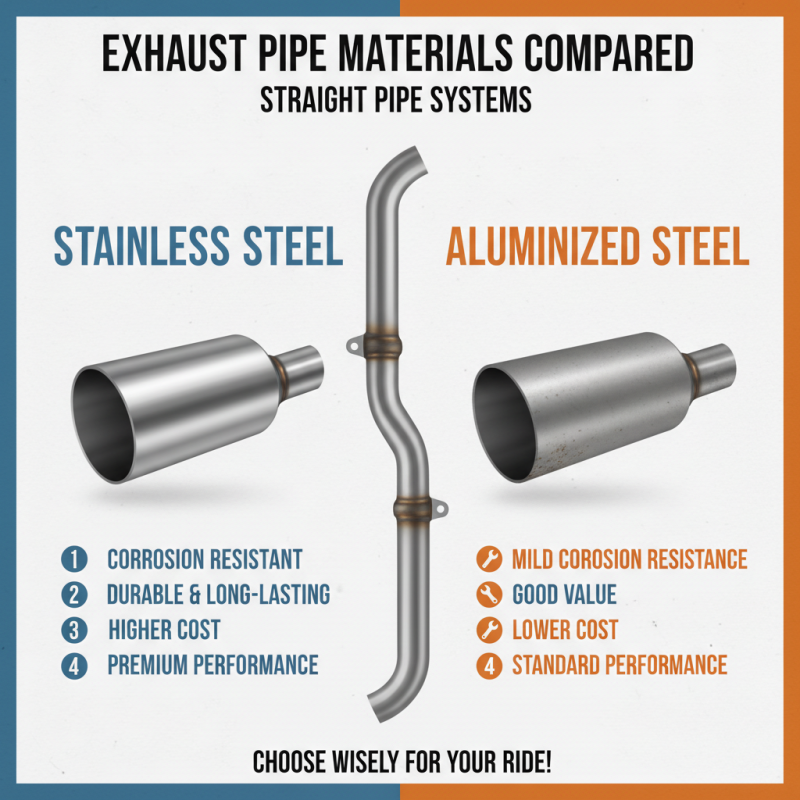
Comparing Material Types: Stainless Steel vs. Aluminized Steel
When choosing a straight pipe exhaust system, the material plays a crucial role. The two most common types are stainless steel and aluminized steel. Understanding their differences can guide you to a well-informed decision.
Stainless steel is renowned for its durability and corrosion resistance. According to a study from the Society of Automotive Engineers, stainless steel exhaust systems typically last longer than their aluminized counterparts. They endure higher temperatures and resist road salt and moisture. However, the initial cost is higher. Some estimates suggest that a stainless steel system can be 50% more expensive.
On the other hand, aluminized steel offers a more budget-friendly option. It is essentially coated steel that provides decent protection against corrosion. However, a report from the Automotive Aftermarket Suppliers Association indicates that aluminized steel systems have a shorter lifespan. They may last around 2 to 5 years, depending on environment and usage. This can lead to higher replacement costs. Users often need to weigh the long-term investment against short-term savings. Balancing these factors is essential in making the right choice.
Evaluating Performance Gains: Horsepower and Torque Data
When selecting a straight pipe exhaust system, evaluating horsepower and torque data is crucial. These metrics reveal the real-world benefits of your investment. A quality exhaust system enhances engine efficiency, resulting in notable performance gains. Data shows that a well-designed straight pipe can increase horsepower by 10-20%. Torque improvements range from 5-15%, depending on your vehicle's specifications.
It’s important to consider your car's specific needs. Not all vehicles respond the same way to exhaust changes. A lighter car might benefit more than a heavier one. Installing a straight pipe can lead to increased noise levels and affect back pressure. Be aware of local noise regulations to avoid fines.
Tips: Research the gains other users have experienced with similar vehicles. Look for dyno charts to compare performance metrics. Speak with experienced mechanics or join forums. Don’t rush your decision. Assess how the modifications align with your driving style.
Installation Considerations and Professional Advice for Best Results
When installing a straight pipe exhaust system, several considerations come into play. The fitment is crucial. A well-fitting system can reduce vibrations and enhance performance. Take measurements carefully before purchasing. A poorly fitted exhaust may lead to leaks, which can diminish power output. Ensure that you understand your car's dimensions to avoid common pitfalls.
Additionally, noise levels can vary significantly with straight pipe setups. A louder exhaust may seem appealing, but it can be detrimental in urban areas due to noise regulations. It's essential to strike a balance between performance and legal noise levels. Some users regret choosing extremely loud systems after experiencing unwanted attention from law enforcement.
Professional installation offers additional benefits. Experienced mechanics can recognize issues that an amateur might overlook. They provide insights into optimizing your exhaust system for better performance. However, not everyone has access to professional services. Sometimes DIY installation may lead to unexpected challenges, such as alignment problems. Reflect on your skills and resources before proceeding.
 +86 17870576410