How to Choose the Right Exhaust Pipes for Your Vehicle?
Choosing the right exhaust pipes for your vehicle is crucial for performance and sound. Exhaust pipes play a significant role in the overall efficiency of your car’s engine. They are designed to redirect exhaust gases away from the engine, but not all pipes provide the same benefits.
When selecting exhaust pipes, consider material quality and diameter. Stainless steel pipes are popular for their durability and resistance to rust. The diameter can affect exhaust flow, impacting power output. Some may overlook these details, leading to poor performance or unwanted noise.
It’s essential to weigh all options and think critically. Why settle for generic options when a tailored solution can enhance your driving experience? Taking the time to research and understand the specifics will ensure that your vehicle not only runs efficiently but also sounds great.
Understanding Exhaust Pipe Functions and Types
When selecting exhaust pipes, understanding their functions and types is crucial. Exhaust pipes play a vital role in a vehicle's performance. They help in expelling harmful gases produced by the engine. According to the Society of Automotive Engineers, proper exhaust systems can enhance engine efficiency by 10% to 15%. This improvement significantly contributes to better fuel economy.
There are mainly two types of exhaust pipes: mandrel-bent and crush-bent. Mandrel-bent pipes maintain a consistent diameter, allowing for optimal gas flow. This type can prevent bottlenecks, enhancing performance. Crush-bent pipes, on the other hand, can restrict flow due to their oval shape. This restriction often leads to reduced engine performance. Research indicates that vehicles fitted with mandrel-bent pipes see a 5% to 10% increase in horsepower.
Choosing the right exhaust type depends on your driving needs. Racing applications may benefit more from mandrel-bent systems for increased power. Daily drivers may find crush-bent pipes adequate for standard performance. However, it's essential to consider the trade-offs. Investing in a high-quality exhaust system can lead to a noticeable fuel and performance improvement, but may come with a higher upfront cost.
Factors to Consider When Choosing Exhaust Pipes
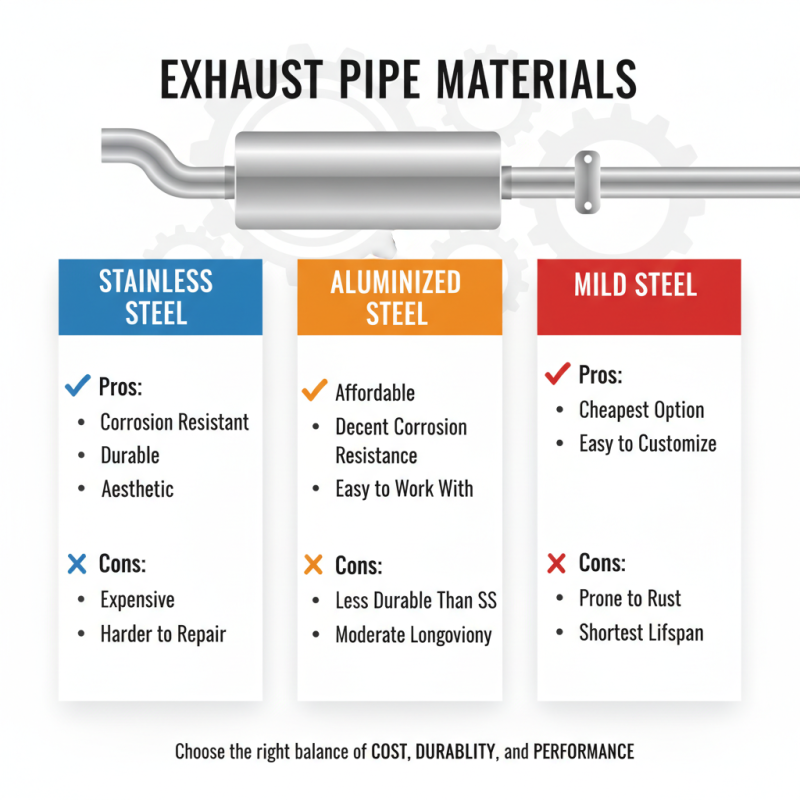
Choosing the right exhaust pipes for your vehicle involves several crucial factors. The material of the pipes is a primary consideration. Stainless steel offers durability and resistance to rust. Aluminized steel is more affordable but may corrode over time. Weighing the pros and cons of each material is essential.
Next, consider the diameter of the exhaust pipes. A larger diameter can improve airflow, enhancing performance. However, too large a diameter can lead to loss of back pressure, negatively affecting torque. Finding the right balance can be tricky.
**Tips:** Always measure your vehicle’s specifications before making a decision. Seek advice from mechanics who understand your specific model. Don’t rush the choice; the wrong pipes can lead to performance issues.
Another factor is the pipe layout. Straight pipes can boost performance, while bent pipes might provide a quieter ride. Think about the sound and power you desire. Visualizing the changes helps clarify your preferences.
**Tips:** Test different setups if possible. Keep your specific driving needs in mind to ensure satisfaction. This process requires reflection on what best suits your style.
How to Choose the Right Exhaust Pipes for Your Vehicle? - Factors to Consider When Choosing Exhaust Pipes
| Factors |
Description |
Impact on Performance |
| Material |
Common materials include stainless steel, aluminized steel, and mild steel. Stainless steel is more durable and resistant to rust. |
Material choice affects durability and sound quality. |
| Diameter |
Exhaust pipe diameter affects exhaust flow. Common diameters range from 2.5 inches to 3 inches for performance applications. |
Larger diameter can enhance performance by improving flow rates but may require tuning. |
| Shape |
Pipes can be straight, bent, or include resonators. The shape influences back pressure. |
A straight pipe typically offers better flow than a bent pipe. |
| Length |
Longer pipes can reduce sound but may increase back pressure. |
Length impacts sound and performance; find a balance for your needs. |
| Muffler Type |
Consider whether to use a chambered, straight-through, or turbo muffler based on sound preference. |
The muffler type significantly affects exhaust sound and performance. |
Material Options for Exhaust Pipes: Pros and Cons
Choosing the right exhaust pipes involves understanding the material options available. Common materials include stainless steel, aluminized steel, and mild steel. Each has its own unique benefits and drawbacks.
Stainless steel is highly durable and resistant to corrosion. It withstands high temperatures well. However, it can be pricier than other options. Aluminized steel offers good corrosion resistance, but its lifespan is shorter. It's more affordable, making it a good choice for budget-conscious buyers. Mild steel, while cost-effective, tends to rust quickly and may not be suitable for areas with harsh weather conditions.
When selecting exhaust pipe materials, consider your vehicle’s usage. If you drive frequently in wet or salty environments, stainless steel might be a wise investment. For occasional drivers in dry regions, aluminized or mild steel could suffice.
Tips: Always inspect your current pipes for damage. Look for rust or holes, as these can degrade performance. The right selection should balance between cost and durability, tailoring your choice to your driving habits. Think critically about long-term values against immediate savings.
Evaluating Pipe Diameter for Optimal Performance
When evaluating pipe diameter, consider how it affects your vehicle's performance. The diameter plays a crucial role in exhaust flow. A wider pipe can increase flow rate, improving horsepower and torque. However, it's not a one-size-fits-all situation. Too large a diameter may lead to a loss of back pressure, which can negatively impact low-end torque. Balancing these aspects is essential.
Experimentation is key for optimal results. Gather data on your vehicle’s current performance. Note how it responds to various driving conditions. Then, explore different pipe sizes within a practical range. A slight change can yield significant effects. Keep track of any modifications, and always take time to reflect on performance metrics. This may appear tedious but is valuable in the long run.
Remember, the right diameter depends on your specific goals. If you're seeking high-end performance, a larger diameter might be suitable. On the contrary, maintaining everyday drivability requires careful consideration of size. Always weigh the pros and cons before making a decision. Vehicle tuning can be a nuanced journey, and learning from each choice will enhance your understanding.
Optimal Pipe Diameter for Vehicle Exhaust Performance
Installation Tips and Maintenance for Exhaust Pipes
When installing exhaust pipes, it’s crucial to prioritize proper fitting. Ensure the pipes align well with your vehicle’s system. Misalignment can cause unusual noises and even performance issues. It’s wise to double-check the measurements before cutting or welding. Take your time during this phase, as rushing can lead to costly mistakes.
Regular maintenance is essential for longevity. Inspect exhaust pipes for rust or corrosion. Look for any leaks or unusual sounds during operation. Cleaning the exterior can prevent buildup. Using a mild cleaner and a soft brush is effective. Pay attention to the hangers and brackets; they can wear out over time and affect the stability of the exhaust.
After installation, listen to your vehicle closely. If you notice any changes in sound or performance, revisit your work. It might indicate an installation error. Keeping a maintenance log can help track any issues over time. Make adjustments as needed to ensure optimal function and prolong the life of your exhaust system.
 +86 17870576410