10 Essential Tips for Choosing the Right Stainless Steel Exhaust Pipe
Choosing the right stainless steel exhaust pipe can significantly influence your vehicle's performance. John Thompson, a renowned automotive expert, once stated, "A quality exhaust pipe not only enhances efficiency but also adds to the vehicle's lifespan." Understanding the factors affecting the selection process is vital for any automotive enthusiast.
Many assume that any stainless steel exhaust pipe will suffice. However, minor differences can lead to major issues. Various configurations and grades exist, each designed for specific needs. For instance, a dual-exhaust setup enhances airflow but may require additional adjustments.
This decision goes beyond just looks. You must consider corrosion resistance and durability. Not all stainless steel is the same; different grades offer varying levels of strength. Reflecting on these aspects ensures your choice aligns with your vehicle's demands. The right exhaust pipe truly makes a difference in engine performance and longevity.
Understanding Stainless Steel Exhaust Pipes and Their Importance
Stainless steel exhaust pipes are vital for automotive performance. They enhance durability and resist corrosion. A recent industry report states that over 60% of car enthusiasts prefer stainless steel for its longevity and aesthetic appeal. This material can withstand high temperatures, which is critical in exhaust systems.
Choosing the right stainless steel is not always straightforward. There are various grades available, such as 304 and 409. Each grade has its own characteristics. For instance, 304 offers excellent corrosion resistance, while 409 is more economical but less durable. This can lead to potential issues if the wrong choice is made. It’s essential to weigh the cost-benefit carefully.
When selecting an exhaust pipe, consider the installation process. Improper fitting can lead to performance issues. Tools and expertise are crucial here. According to industry surveys, nearly 30% of users encounter fitment issues with aftermarket parts. This highlights the need for thorough research and expert advice. Understanding the nuances of stainless steel options can prevent costly mistakes in the long run.
Key Factors to Consider When Selecting Stainless Steel Exhaust Pipes
When selecting stainless steel exhaust pipes, several key factors deserve attention. First, consider the material grade. Higher grades like 304 or 316 offer better corrosion resistance. They are essential for durability, especially in harsh environments. Cheaper alternatives may corrode quickly, leading to costly replacements.
Fitment is another crucial aspect. Ensure the pipe's dimensions match your vehicle's specifications. A poor fit can cause leaks and reduce performance. Always measure before purchasing. Additionally, check for compatibility with existing components. Mixing parts can lead to issues in installation.
Sound is an often-overlooked factor. Think about the sound you want your vehicle to produce. Some pipes can create a loud, aggressive tone, while others are quieter. Keep in mind that sound preferences can vary widely. Thus, listening to samples or consulting with experts helps.
Lastly, think about aesthetics. The look of the exhaust pipe can enhance your vehicle's appeal. Choose a finish that complements your car's design. There’s much to ponder, but these tips can guide your selection process. The right choice can significantly impact both performance and style.
Comparison of Key Factors in Choosing Stainless Steel Exhaust Pipes
Different Types of Stainless Steel Used in Exhaust Pipe Manufacturing
In exhaust pipe manufacturing, the type of stainless steel used can significantly impact performance and longevity. Common grades include 409, 430, and 304 stainless steel. Each grade has unique properties. For instance, 304 stainless steel offers excellent corrosion resistance. It is ideal for high-performance applications. Meanwhile, 409 stainless steel is more affordable but less resistant to rust.
When selecting an exhaust pipe, consider your vehicle's specific needs. If your environment has high humidity, choose a grade with better corrosion resistance. It's essential to weigh cost against durability. Many enthusiasts ignore this crucial balance. Some may regret opting for a cheaper option, leading to frequent replacements.
Tip: Look for pipes with a higher nickel content. This can enhance resistance to oxidization. Remember, a stainless steel exhaust should also fit snugly. Gaps can lead to unwanted noise and exhaust leaks, impacting performance. Each small detail matters in exhaust design.
10 Essential Tips for Choosing the Right Stainless Steel Exhaust Pipe - Different Types of Stainless Steel Used in Exhaust Pipe Manufacturing
| Stainless Steel Type |
Corrosion Resistance |
Heat Resistance |
Strength |
Cost |
| 304 Stainless Steel |
Excellent |
Up to 870°C |
Moderate |
Moderate |
| 409 Stainless Steel |
Good |
Up to 700°C |
Lower |
Low |
| 316 Stainless Steel |
Superior |
Up to 925°C |
High |
High |
| Stainless Steel Alloys |
Varies |
Varies |
Varies |
High |
| Ferritic Stainless Steel |
Good |
Up to 800°C |
Moderate |
Moderate |
Evaluating Thickness and Durability for Optimal Performance
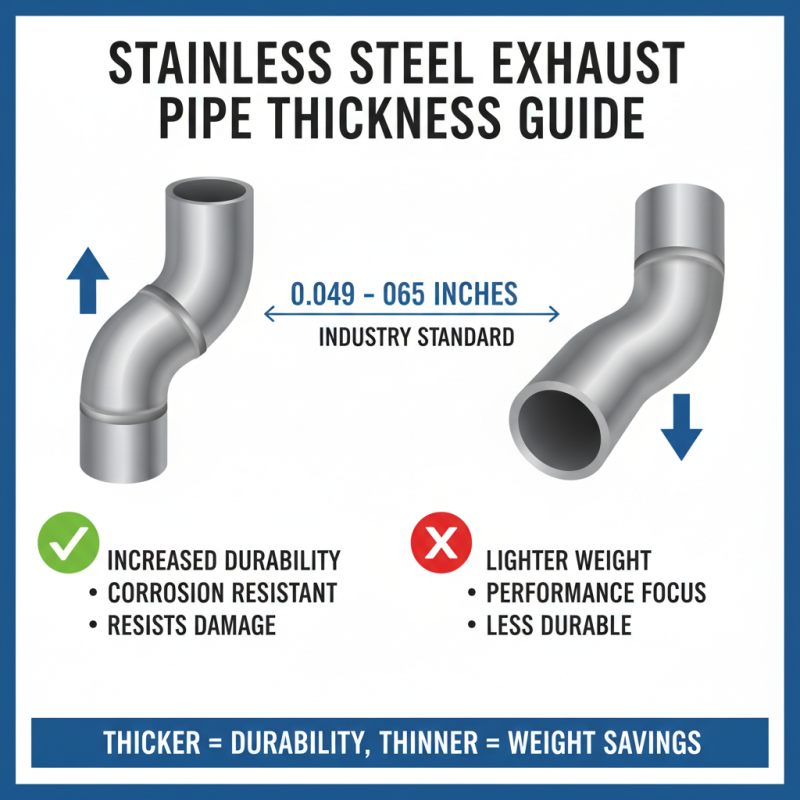
When choosing a stainless steel exhaust pipe, evaluating thickness is crucial for durability and performance. A common industry standard suggests that exhaust pipes should have a thickness between 0.049 inches and 0.065 inches. Thicker pipes generally resist corrosion and physical damage better than thinner ones. However, increased thickness may add weight, which some performance enthusiasts may not want.
A report from the Society of Automotive Engineers states that thinner pipes can reduce back pressure, potentially boosting engine performance. Yet, thinner materials may not last as long under extreme conditions. This creates a dilemma for car enthusiasts seeking both performance and longevity. It’s essential to consider your driving style and environment when making a choice between thickness and performance.
Keeping the balance between weight and durability can be tricky. While you might save weight with thinner pipes, you risk degradation over time. An ideal solution would meet your performance needs while ensuring long-term reliability. This need for compromise often leads to second-guessing, as the wrong choice could lead to repeated replacements or repairs. Overall, understanding the interplay between thickness, durability, and performance is vital for making a smart purchase.
Cost vs. Quality: Finding the Right Balance for Your Budget
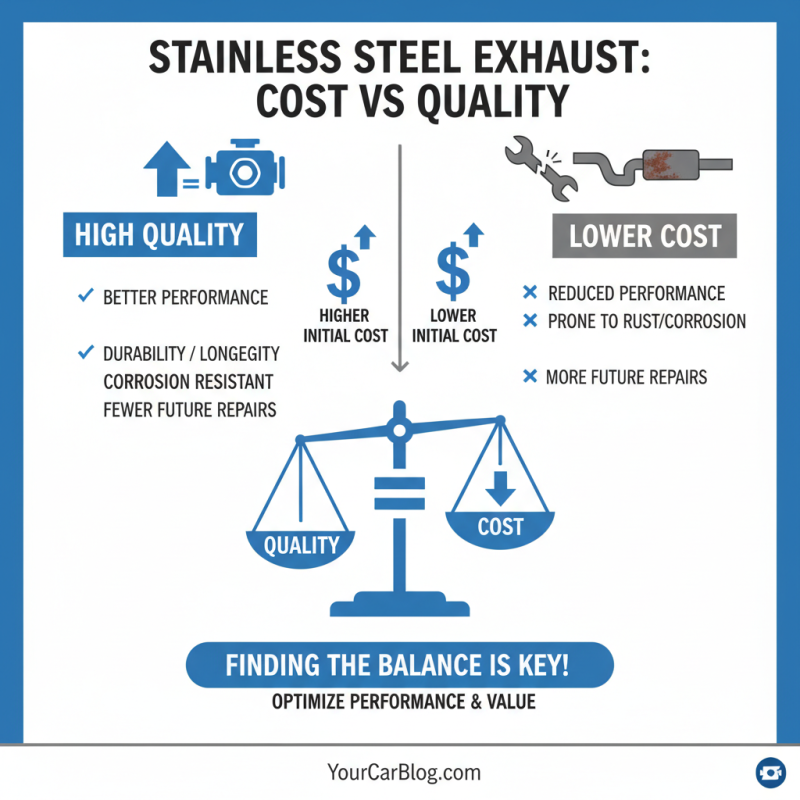
When choosing a stainless steel exhaust pipe, balancing cost and quality is crucial. High-quality materials can significantly enhance your vehicle's performance. However, they often come with a higher price tag. It's tempting to go for the cheapest option, but this could lead to future costs. A poorly made exhaust pipe may rust or corrode sooner.
Take time to evaluate your budget. Sometimes, spending a little more upfront can save money later. Look for pipes with durable finishes that resist heat and corrosion. It might also be wise to inspect the welds closely. Quality welds indicate better construction, which often translates to improved longevity. If a pipe has visible defects or feels lightweight, it may not hold up well over time.
Consider what you prioritize. Are you after a loud sound, or do you want performance? Balancing these preferences can lead to compromises. Sometimes, an expensive option does not guarantee the best sound. Keep an open mind, and don’t rush the decision. Well-researched choices can ensure satisfaction in the long run.
 +86 17870576410