Looking for Something that’s not listed on our site?
Contact us and we can make it happen!

Leave Your Message

2026 Top Titanium Alloy Exhaust Benefits and Applications?

The emergence of Titanium Alloy Exhaust systems marks a significant advancement in automotive engineering. These innovative exhausts promise lighter weight and improved performance. Many enthusiasts seek upgrades that enhance their vehicle's capabilities. Titanium alloy is a game-changer due to its remarkable properties.

This premium material resists corrosion and withstands high temperatures effectively. It's a more durable choice when compared to traditional materials. However, the question remains: are all waste heat and energy losses eliminated? Perhaps not. A closer look reveals some efficiency gaps that warrant attention.

Moreover, the cost of Titanium Alloy Exhaust systems can run high. This often leads to debates about their true value. Are the benefits worth the investment? It's a critical consideration for many car owners. Exploring these applications helps clarify the potential of titanium alloys in the automotive industry. With an eye on the future, we aim to understand how Titanium Alloy Exhaust can reshape performance standards.

2026 Top Titanium Alloy Exhaust Benefits and Applications?

Overview of Titanium Alloys in Exhaust Systems

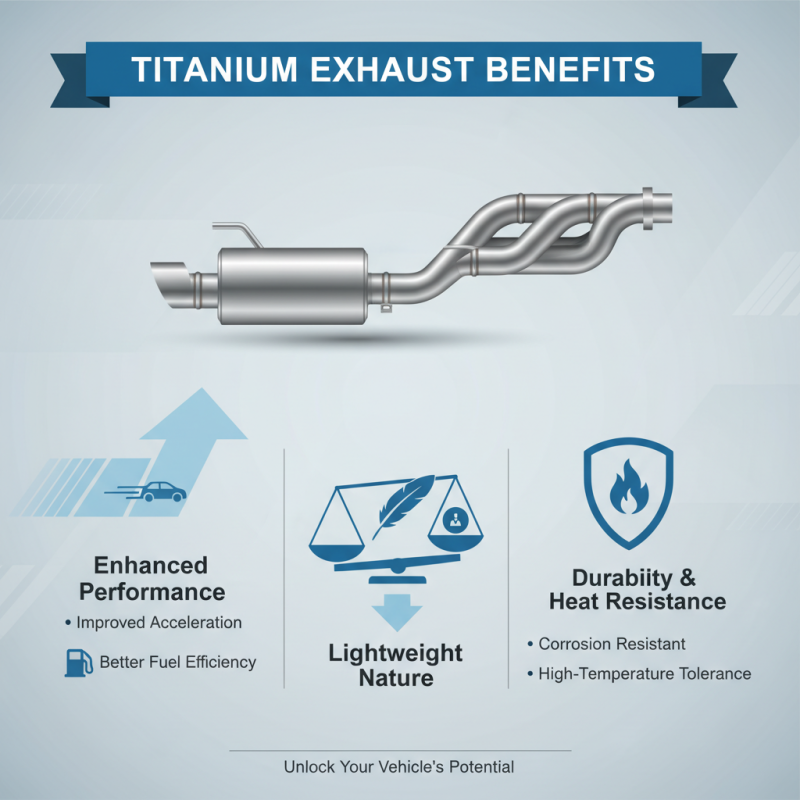
Titanium alloys have gained attention in exhaust systems due to their unique properties. They are lighter than stainless steel, offering significant weight reduction. This is particularly beneficial for high-performance vehicles. The lower weight can enhance acceleration and improve fuel efficiency.

These alloys also resist corrosion better than traditional materials. They perform well under high temperatures, which is vital for exhaust systems. However, the manufacturing process can be complex and costly. Not every manufacturer has the capability to produce high-quality titanium components. This creates a gap between potential benefits and actual applications.

While the advantages are clear, challenges remain. Not all engines can utilize titanium alloy exhaust systems effectively. The installation process may require specific adjustments to fit different vehicles. Moreover, some users report concerns about durability over long periods. As the industry evolves, addressing these issues will be crucial for widespread adoption.

2026 Top Titanium Alloy Exhaust Benefits and Applications

Attribute Details
Material Properties High strength-to-weight ratio, corrosion resistance, and heat resistance.
Common Alloys Grade 5 (Ti-6Al-4V), Grade 2, Grade 23 (Ti-6Al-4V ELI).
Benefits Reduced weight, improved performance, and increased durability.
Applications Automotive, aerospace, and high-performance motorcycle exhaust systems.
Temperature Resistance Effective in high-temperature environments up to 600°C (1112°F).
Environmental Resistance Excellent resistance to oxidation and chemical corrosion.
Manufacturing Techniques Common techniques include welding, CNC machining, and 3D printing.

Key Benefits of Using Titanium Alloys for Exhaust Applications

2026 Top Titanium Alloy Exhaust Benefits and Applications?

Titanium alloys are increasingly popular in exhaust applications. They offer unique benefits that can't be ignored. One major advantage is their lightweight nature. Reducing weight in exhaust systems improves overall vehicle performance. Lighter components can enhance acceleration and fuel efficiency, which many drivers appreciate.

Durability is another key benefit. Titanium alloys resist corrosion effectively. They withstand high temperatures and harsh conditions. This longevity means fewer replacements and repairs. However, sourcing quality titanium can be challenging and costly. Some manufacturers struggle to balance price with performance.

Thermal efficiency also plays a crucial role. Titanium alloys handle heat much better than traditional materials. This means they can maintain optimal exhaust flow and improve engine efficiency. Yet, fabricating components from titanium requires specialized skills and equipment. Not all workshops can deliver this level of expertise. The potential for subpar workmanship exists, so choosing the right provider is essential.

Comparative Analysis: Titanium Alloys vs. Traditional Materials

2026 Top Titanium Alloy Exhaust Benefits and Applications?

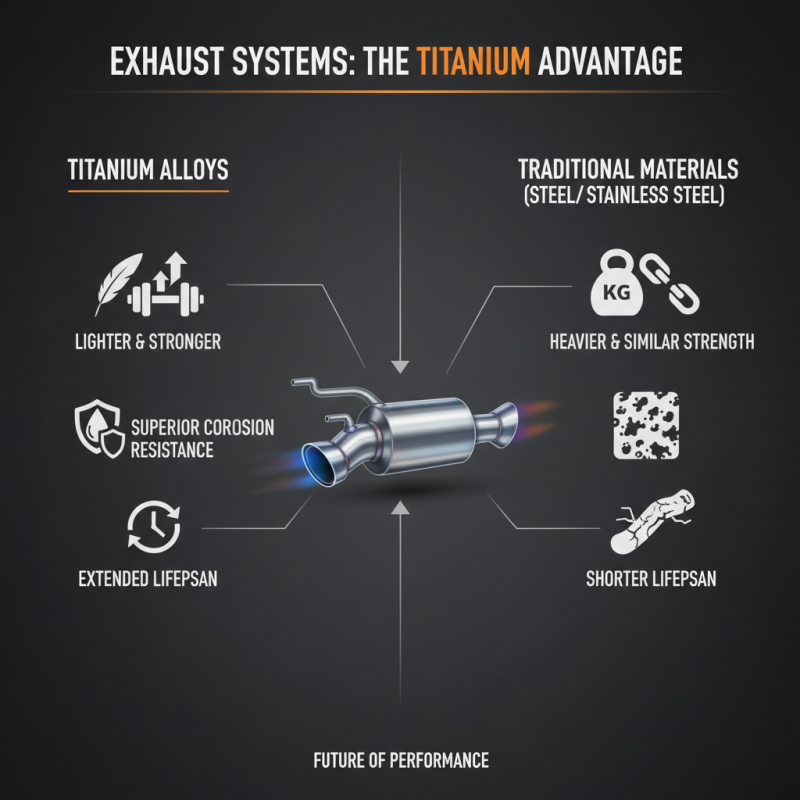
When comparing titanium alloys to traditional materials, several key factors emerge. Titanium alloys are lighter than steel but equally strong. This makes them ideal for exhaust systems. They resist corrosion better than stainless steel. This property extends the lifespan of exhaust components significantly. Many manufacturers are exploring these advantages.

Tips: Consider the environment in your choice. If you drive in coastal areas, titanium is a better option. It can withstand salty air.

However, titanium alloys come with challenges. They can be more expensive to produce. Fabrication is a complex process that requires specialized techniques. Some workshops may not be equipped to handle titanium. Potential buyers should weigh these factors carefully.

Tips: Always ask about the manufacturing process. Understanding how your exhaust is made can help in the decision. Moreover, not all titanium alloys are the same; research the specific grades.

Common Applications of Titanium Alloy Exhaust Systems

Titanium alloy exhaust systems have gained popularity in various applications due to their unique properties. These materials are lightweight yet incredibly strong, which allows for improved vehicle performance. They resist corrosion effectively, making them suitable for high-performance cars and marine vessels.

Many automotive manufacturers use titanium alloys in their exhaust systems. This choice leads to better fuel efficiency and increased horsepower. In motorsport, the lightweight nature of titanium decreases the overall vehicle weight. As a result, racers can achieve faster lap times and better handling.

Consider these tips when exploring titanium alloy exhaust options. Ensure that the design fits your vehicle perfect—improper fit can lead to leaks. Pay attention to the temperature range; titanium can handle extreme heat, but other materials may not. Lastly, always consult with experts to understand the potential trade-offs. Not every vehicle benefits from titanium exhaust systems; sometimes, traditional materials could suffice.

Benefits and Applications of Titanium Alloy Exhaust Systems in 2026

Future Trends in Titanium Alloy Exhaust Technologies

The future of titanium alloy exhaust technologies looks promising. Engineers are exploring innovative designs to enhance performance. These advancements aim to reduce weight while improving durability. Titanium alloys are inherently resistant to corrosion, making them suitable for various environments. Such materials withstand extreme temperatures, contributing to overall efficiency.

Research shows that titanium alloys can enhance fuel efficiency. They are lighter than traditional materials, which can lead to lower energy consumption. This shift can address growing environmental concerns. However, production costs remain a challenge. Many manufacturers are unsure about integrating these materials.

Tips: Consider the long-term benefits of investing in titanium alloys. Weigh performance against cost carefully. Explore potential collaborations to share research and development costs. Staying informed about market trends will help in making better decisions. Embracing these technologies could lead to significant advancements in automotive and aerospace fields. The road ahead may be uncertain, but the potential is clear.