+86 17870576410

Choosing the right Catted Downpipe is not simply a hunt for louder turbo sounds. It is a careful decision involving emissions equipment, exhaust flow, heat control, fitment, and daily reliability. Under the hood, a poorly matched pipe can create rattles, warning lights, excessive heat, or disappointing gains. The shiny finish may look convincing. The internal design matters more.
Mike Kojima, an automotive engineer and motorsport journalist, offers a useful principle: “A downpipe must support the whole engine system, not just chase a louder exhaust note.” That idea should guide every purchase. A quality Catted Downpipe needs a properly sized catalytic converter, durable welds, accurate oxygen-sensor locations, and a flange that matches the vehicle. It should also suit the engine tune and local emissions requirements. Laws and inspection rules vary. Check them before ordering.
This guide shares seven practical tips for comparing products with a more experienced eye. We will examine catalyst quality, pipe diameter, materials, heat shielding, installation, software compatibility, and seller support. Some claims deserve doubt. “Race proven” is not a complete specification. Neither is a dramatic horsepower number without testing conditions. Look for documented materials, realistic dyno information, and clear warranty terms. Measure twice. Spend once.
Even experienced enthusiasts can overlook small details, such as a sensor extension, underbody clearance, or a missing gasket. I have found that these minor issues often become the most frustrating part of installation. The best choice is not always the cheapest or loudest option. It is the Catted Downpipe that works cleanly, legally, and consistently with the entire vehicle.
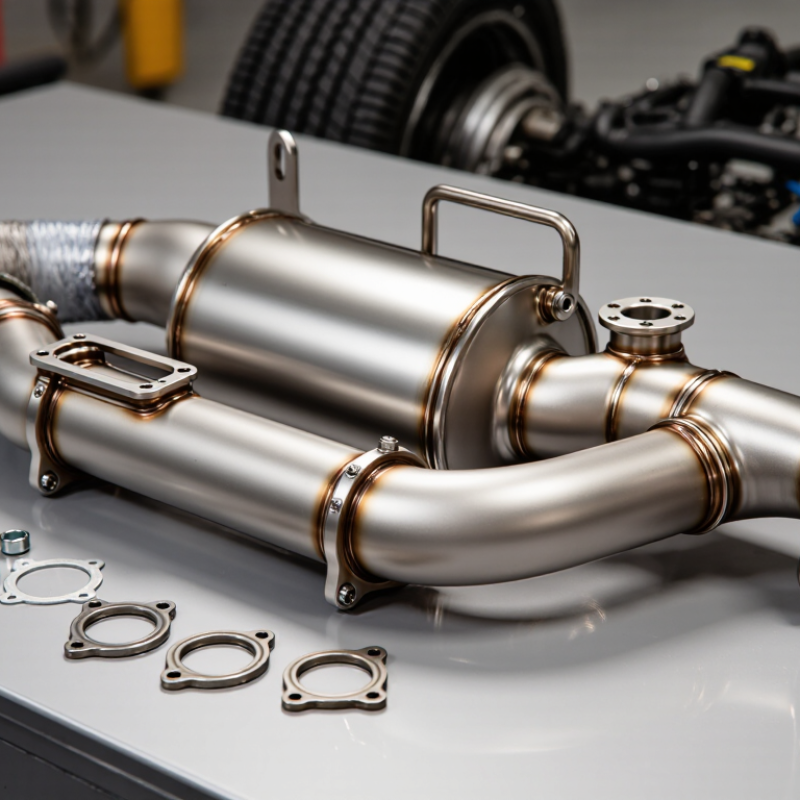
Buying the right catted downpipe starts with compatibility, not horsepower claims. Confirm your engine code, model year, turbo layout, flange pattern, oxygen-sensor locations, and clearance near the subframe. A part that fits the chassis may still trigger faults or contact the heat shield. SAE J1979 diagnostic data can help you understand oxygen-sensor and catalyst-monitor behavior. Your repair manual remains essential.
Tip 1: Define your performance target. The EPA’s 2023 Automotive Trends Report recorded 26.4 mpg average real-world fuel economy for 2022 vehicles. That figure shows how certification conditions differ from daily driving. A freer-flowing downpipe may improve response, but results depend on turbo size, calibration, fuel quality, and exhaust design. Do not trust a single dyno graph.
Tip 2: Check the catalyst specification and thermal position. A close-coupled catalyst usually reaches operating temperature faster, while a poorly positioned unit may suffer from heat loss. Ask for measured cell density, substrate material, emissions-testing information, and catalyst-monitor compatibility. Tip 3: Compare measured gains, not promises. Independent tests should show baseline power, corrected conditions, and repeat runs. Installation can reveal small problems, too. I have seen clearance overlooked until the first cold start. Recheck oxygen-sensor wiring, fastener torque, and heat shielding after driving. One detail can change everything.
Buying the right catted downpipe starts with the converter, not pipe diameter. A three-way catalyst controls hydrocarbons, carbon monoxide, and nitrogen oxides. Ceramic substrates are light and retain heat well. Metallic substrates handle vibration and repeated heat cycles better. Heat matters. During workshop inspections, I check the certification number, cell density, welds, and oxygen-sensor position. Cheap-looking internals deserve skepticism. My judgment is not perfect, especially without laboratory testing.
Compare emissions ratings carefully. Do not treat “high-flow” as emissions approval. A 200-cell converter may reduce restriction, while a 400-cell design offers more conversion surface. The best choice depends on engine calibration, exhaust temperature, and catalyst placement. EPA’s Tier 3 Final Rule set a 30 mg/mile fleet-average NOx standard, compared with 70 mg/mile under Tier 2. It also reduced gasoline sulfur limits to 10 ppm. Those figures show why fuel quality and tuning affect catalyst performance.
For street use, confirm vehicle-specific certification in your jurisdiction. California Air Resources Board Executive Orders identify approved replacement applications, while federal rules apply separately. A generic “Euro” or “race” emissions label proves little. The International Council on Clean Transportation’s real-world emissions assessments show that laboratory results can understate pollution during cold starts and hard acceleration. Numbers can mislead. Request the test standard, durability rating, precious-metal information, and application list before buying. Expect compromises: lower restriction can mean weaker conversion performance or louder exhaust.
Compare catalytic converter types, substrate materials, and emissions ratings before choosing a downpipe.
A three-way catalyst is designed for gasoline engines operating near stoichiometric air-fuel conditions and targets carbon monoxide, hydrocarbons, and nitrogen oxides. An oxidation catalyst mainly targets carbon monoxide and hydrocarbons.
Ceramic substrates are widely used and provide a cost-effective structure, but they can be more vulnerable to thermal shock. Metallic substrates can use thinner walls and may heat up quickly, while requiring careful protection from vibration and overheating.
The chart compares European gasoline passenger-car type-approval limits. Always confirm that the selected downpipe is certified for the vehicle, model year, engine calibration, and emissions rules in your jurisdiction.
Values shown are maximum European gasoline passenger-car type-approval limits in grams per kilometre. Actual vehicle emissions depend on engine condition, calibration, catalyst temperature, and driving conditions.
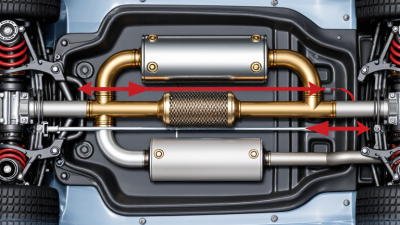
Check the vehicle’s exact year, engine, drivetrain, and transmission before ordering. Small fitment differences can change pipe length or sensor placement. Compare the product drawing with your original downpipe. Check oxygen-sensor ports, heat-shield mounts, and nearby exhaust clearances. A pipe that looks correct may still contact the steering shaft or subframe. Measure twice.
Study the flange design carefully. A flat, accurately machined flange should meet the matching exhaust surface without force. Inspect bolt-hole spacing, flange thickness, and the included gasket. Multi-layer gaskets can help seal uneven surfaces, but they cannot fix poor alignment. Do not ignore the catalyst housing diameter. It affects clearance and installation space. I once underestimated a heat shield gap; the pipe fitted, but vibration appeared after driving.
Review the installation requirements before buying. Confirm whether new studs, nuts, gaskets, sensor extensions, or brackets are needed. Check the manufacturer’s torque guidance and use a calibrated torque wrench where possible. Work only on a fully cooled exhaust system, with secure vehicle support and suitable eye protection. Some vehicles require post-installation checks, diagnostic scans, or professional calibration. Requirements vary by location, so verify emissions and inspection rules before making changes. A lift is useful, but access can still be awkward. That part is easy to underestimate.
A suitable catted downpipe should begin with traceable quality, not a polished photograph. Check the alloy grade, weld consistency, flange flatness, catalyst-cell density, and heat shielding. I once treated a clean weld as proof of quality. It was not. Ask for material records, flow testing, and emissions test documentation linked to your exact engine and model year. SEMA’s 2023 Market Report valued the U.S. specialty-equipment sector at about $52.3 billion, but market size does not guarantee engineering quality.
Certification requires closer inspection. Look for a verifiable approval number, testing agency, covered vehicle configuration, and installation limits. Generic “road legal” wording is weak evidence. The EPA’s 2023 Automotive Trends Report recorded average new-vehicle fuel economy at 26.4 mpg and carbon dioxide emissions at 347 grams per mile. These figures show why emissions hardware remains highly regulated. Check federal, state, and local requirements before purchase, especially where separate emissions approvals apply. Never assume an imported certificate is accepted locally.
Warranty language reveals the supplier’s confidence. Confirm coverage length, catalyst-performance terms, labor exclusions, return procedures, and whether tuning changes affect eligibility. Keep invoices, photographs, and installation records. The Federal Trade Commission advises consumers to review written warranty terms before buying. That step feels slow. It can prevent an expensive dispute. A responsible seller should also provide technical support and clear compliance documents, rather than promising universal legality.
| Tip | Evaluation Dimension | What to Verify | Reliable Supporting Data | Warning Signs | Recommended Buying Decision |
|---|---|---|---|---|---|
| 1 |
Fitment Accuracy Vehicle and engine compatibility |
Confirm the exact model year, engine code, drivetrain, turbocharger layout, transmission configuration, and oxygen-sensor locations. Check whether the part is designed for the original exhaust system or a specified aftermarket system. |
|
“Universal fit” wording without vehicle-specific data, missing sensor-port details, or unclear turbo and flange compatibility. | Select a product with documented vehicle-specific fitment. Compare the flange shape, pipe routing, sensor positions, and connection diameter before purchase. |
| 2 |
Catalyst Quality Substrate and emissions function |
Determine whether the catalytic converter uses a metallic or ceramic substrate, its construction quality, heat tolerance, cell-density specification, and intended engine power range. A catted downpipe should be evaluated as an emissions-control component, not only as a performance part. |
|
No catalyst specification, vague claims such as “high-flow” without test data, loose internal material, or poorly protected catalyst housing. | Prefer transparent technical specifications and robust catalyst retention. Do not assume that a larger pipe or lower restriction automatically means better real-world performance. |
| 3 |
Material and Fabrication Corrosion resistance and structural quality |
Review the tube material, wall construction, flange thickness, weld quality, flex-joint design, heat-shield arrangement, and resistance to thermal cycling. Stainless steel grades should be identified rather than described only as “premium.” |
|
Thin or distorted flanges, uneven welds, unsupported catalyst weight, missing flex section where movement is expected, or unexplained material claims. | Choose construction that matches the vehicle’s heat and vibration conditions. Inspect product photographs carefully and request material details before ordering. |
| 4 |
Certification and Testing Verifiable compliance documentation |
Identify exactly what has been tested or certified, which vehicle applications are covered, and which authority or laboratory issued the documentation. Certification is not interchangeable with a generic “tested” or “approved” statement. |
|
Unverifiable logos, certificate numbers that cannot be checked, documents for a different vehicle, or claims that certification is “pending.” | Verify the document directly through the relevant authority or testing body. Treat a product as uncertified unless its approval status and application coverage are documented. |
| 5 |
Legal Compliance Road-use and emissions rules |
Check the laws of the vehicle’s registration location. Requirements may differ by country, state, province, inspection program, model year, and emissions category. A part suitable for off-road or competition use may not be legal for public-road use. |
|
“For racing use only,” “not for public roads,” removal or relocation of emissions equipment, or claims that passing one inspection guarantees legality everywhere. | Confirm legality with the local transport, emissions, or inspection authority before purchase. Keep all approval documents and installation records. |
| 6 |
Warranty and Support Coverage, exclusions, and service process |
Read the warranty period, covered defects, proof-of-purchase requirements, installation conditions, return window, and exclusions for modified vehicles, racing use, improper installation, or catalyst contamination. |
|
Warranty promises shown only in advertisements, no exclusions listed, customer-paid return shipping without clarification, or support that cannot provide installation guidance. | Save the invoice, product description, approval documents, and installation records. Choose a seller that explains how defects, fitment issues, and catalyst failures are handled. |
| 7 |
Total Value Performance, installation, and ownership cost |
Compare the complete cost, including gaskets, hardware, heat protection, professional labor, tuning requirements, possible inspection fees, and replacement risk. Evaluate sound, drivability, emissions behavior, and durability together. |
|
Unrealistic horsepower claims, no test conditions, hidden hardware costs, mandatory tuning not disclosed, or a low purchase price supported by weak catalyst and weld quality. | Select the option with the strongest combination of documented fitment, legal status, catalyst information, construction quality, warranty coverage, and total ownership cost. |
Buying the right catted downpipe requires more than chasing the lowest price. Compare material, weld quality, catalyst loading, oxygen-sensor placement, and warranty terms. SAE research links lower exhaust restriction with reduced pumping losses in turbocharged engines. However, gains depend heavily on calibration, turbo size, and existing exhaust flow. A cheaper pipe may deliver little measurable power.
Sound changes quickly. A high-flow catalyst can make acceleration sharper and the exhaust louder. It may also introduce rasp, cabin drone, or cold-start odor. Check independent sound recordings, not only marketing claims. The U.S. EPA’s 2023 Automotive Trends Report shows efficiency improvements are measurable across modern vehicles, but hardware changes alone do not guarantee better fuel economy. Real-world results vary.
Reliability deserves equal weight. Choose a catalyst with documented temperature ratings and emissions performance. Confirm its approval for your location before installation. Exhaust leaks can damage sensors and create expensive diagnostic work. AAA’s 2023 Your Driving Costs report estimates average maintenance and repair expenses at 9.83 cents per mile, excluding fuel. That figure is not specific to downpipes, but it shows how small maintenance costs accumulate. I would not assume a performance part pays for itself. Inspect the flange after heat cycles, monitor catalyst efficiency codes, and budget for replacement gaskets. A common mistake is ignoring labor, software calibration, and future inspection costs.