Looking for Something that’s not listed on our site?
Contact us and we can make it happen!

Leave Your Message

Top Car Exhaust Manufacturers for Global Buyers

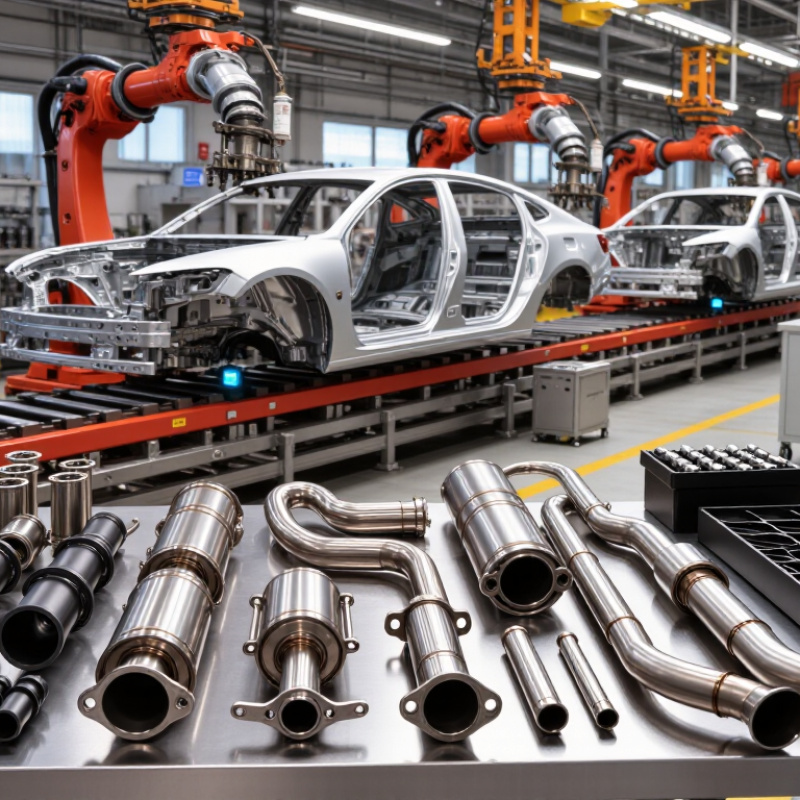
Global buyers comparing top car exhaust manufacturers need more than a polished catalogue. They need a supplier whose products match their vehicles, production plans, and quality expectations. Car Exhaust Manufacture covers a broad field, from exhaust manifolds and pipes to mufflers and complete systems. Each component must fit correctly and perform consistently. A small mismatch in pipe diameter or flange position can create costly delays on an assembly line.

This guide looks at manufacturers through practical questions: Do they explain their materials and production capabilities clearly? Can they share inspection details, sample procedures, and realistic lead times? How do they handle custom specifications and communication across time zones? These details matter. A clear drawing, a dated sample label, or a careful response about stainless-steel grades can reveal more than a sweeping sales claim. Buyers should also distinguish a factory from a trading company and verify who controls production and quality checks. Good answers help.

No supplier is right for every market or vehicle program. Price matters, but so do repeatability, documentation, and support after an order ships. A shortlist is only a starting point, not proof of capability. Even a neat comparison sheet can miss a production constraint or a communication gap; I would treat it as a working tool, not a verdict. The manufacturers discussed here offer global buyers a structured basis for comparison, while leaving room for independent checks and project-specific judgment.
Top Car Exhaust Manufacturers for Global Buyers

How Car Exhaust Systems Work: Manifolds, Catalysts, DPFs, and SCR

A car exhaust system does more than carry gas away from the engine. The manifold gathers hot exhaust from individual cylinders and directs it into a shared pipe. Its shape and material affect heat flow, fit, and resistance to repeated temperature changes. Hot, pulsing gas meets several components in sequence. Small details matter. A catalytic converter uses coated internal surfaces to encourage reactions that reduce certain harmful emissions. It needs suitable operating temperatures, so placement and engine calibration matter too. Real systems are less tidy than diagrams; a small leak or poor joint can disrupt performance.

Diesel vehicles may use a diesel particulate filter, or DPF, to trap soot in a porous ceramic structure. During regeneration, heat helps burn much of the collected soot, though non-combustible ash can remain and eventually require attention. Select systems also use selective catalytic reduction, or SCR, where a metered reductant helps convert nitrogen oxides into nitrogen and water. Not every vehicle uses the same layout. For global buyers, useful checks include engine compatibility, pipe dimensions, sensor connections, corrosion-resistant materials, and documented test results. A polished exterior is not enough. Service access deserves a closer look. A cramped sensor location can turn routine maintenance into a frustrating job.
Why OICA’s 93.5 Million Vehicles Built in 2023 Matter to Buyers

93.5 million OICA recorded motor vehicles produced worldwide in 2023, about 10% more than in 2022. That figure matters to buyers because it signals a large, active supply chain for exhaust systems, pipes, silencers, and related parts. It does not mean every region needs the same components. Vehicle models, engine types, road conditions, and replacement cycles vary. Buyers should compare a manufacturer’s production capacity with their actual order volumes and required specifications, not rely on headline scale alone.

Nearly 14 million The mix is changing, too. The International Energy Agency reported electric car sales in 2023, around 18% of global car sales. Battery-electric vehicles do not use conventional exhaust systems, so total vehicle output is not a direct forecast of exhaust demand. Still, combustion and hybrid vehicles remain part of the global fleet, creating ongoing needs for compatible components and replacement parts.

Ask suppliers for material specifications, dimensional checks, batch traceability, and test records. Then confirm that samples fit the intended vehicle applications.

Scale matters. Not automatically. OICA’s production total is useful context, but buyers still need to assess lead times, quality consistency, and regional demand carefully.

How to Compare Exhaust Suppliers by Technology, Capacity, and Global Reach

Global buyers should compare exhaust suppliers on evidence, not broad promises. Ask how they control tube bending, welding, and surface finishing. A capable manufacturer can explain its process and show inspection records for dimensions, weld consistency, and corrosion protection. Request a sample and check fit, finish, and packaging. Details matter. Production capacity also needs careful review. Monthly output figures mean little without information about current utilization, tooling, and quality checks during peak periods.

Tips: Ask for recent test reports, sample lead times, and a clear production schedule. Confirm which export markets the supplier serves and what shipping support it provides. Verify that claimed certifications cover the relevant facility and products.

Global reach is more than a map of past shipments. Reliable communication, realistic lead times, export-ready packing, and responsive handling of product issues all matter. Ask for references from comparable orders where possible. A polished brochure is not enough. I would also compare how suppliers respond to technical questions; vague answers may signal gaps, though one slow reply is not proof of poor performance. Use the same checklist for each candidate, then weigh verified capability against price and delivery risk.

Leading Global Exhaust Makers: FORVIA, Tenneco, Eberspächer, and More

Global buyers comparing leading exhaust makers should look beyond catalog breadth. Major suppliers typically combine exhaust manifolds, catalytic converters, particulate filters, sensors, and thermal-management components. They also differ in engineering depth, regional production, and aftermarket support. OICA reported 93,546,599 motor vehicles produced worldwide in 2023, roughly 10% more than in 2022. That production scale makes dependable capacity and consistent quality important purchasing criteria. Still, volume alone is not proof of a good fit. Not a guarantee. Buyers should request durability-test results, material specifications, and clear evidence of local service capability.

Technology planning matters too. The IEA’s Global EV Outlook 2024 reported nearly 14 million electric car sales in 2023, about 18% of global car sales. This shift changes long-term product demand, while combustion and hybrid vehicles still require carefully engineered exhaust systems. Leading global suppliers must therefore support current platforms and adapt their development plans. Compare validated performance, delivery lead times, warranty terms, and access to replacement parts. Ask how a supplier handles corrosion, vibration, and repeated heat cycles; a clean-looking prototype may not reveal years of real-world wear. These details can be tedious. They are worth checking.

Global Vehicle Production by Leading Manufacturing Countries (2023)

Vehicle production volumes offer a useful indicator of the major markets served by the global exhaust-system supply chain.

Source: OICA, 2023 production statistics. Figures include passenger cars and commercial vehicles.

How Euro 7’s 2026–2027 Car Deadlines Affect Global Sourcing

Euro 7’s car deadlines matter to global sourcing now. New car and van types must meet the rules from 29 November 2026; all new cars and vans follow from 29 November 2027. These dates apply to the EU market, while other regions may set different requirements. Dates matter. Euro 7 does not simply demand a completely new exhaust design for every car. Many tailpipe limits remain close to Euro 6, but emissions durability and measurement requirements receive greater attention. Buyers should confirm each vehicle’s category, approval timeline, and destination market before placing large orders.

For exhaust suppliers, practical readiness matters more than a brochure claim. Ask for traceable material records, test results, and clear production-change controls. Check weld consistency, coating coverage, and sensor connections on physical samples. Small defects can become expensive when parts cross borders or fail during validation. Not every supplier will have the same testing capacity. That is worth examining. Buyers should also allow time for engineering changes and repeat tests, especially when sourcing parts for several vehicle platforms. A low unit price may look attractive, but delayed approval can erase the savings. Forecasts can still wobble, so keep realistic buffers in delivery schedules.

Top Car Exhaust Manufacturers for Global Buyers - How Euro 7’s 2026–2027 Car Deadlines Affect Global Sourcing

Global sourcing guide: The table compares exhaust-system supplier capability areas rather than ranking named companies. Euro 7 compliance is assessed at vehicle level; component suppliers should provide evidence that their parts support the vehicle manufacturer’s approved emissions and durability strategy.

Area Requirement or capability Verified detail Implication for global buyers Evidence to request from suppliers
Euro 7 passenger-car and van timeline
New vehicle types (M1 and N1) Euro 7 applies to newly approved types of cars and light commercial vehicles. 29 November 2026 Allow time for design freeze, vehicle-level validation, and approval before the new-type deadline. Development schedule, vehicle-programme references, and documented support for homologation testing.
All new vehicles (M1 and N1) Euro 7 requirements extend to all new cars and light commercial vehicles placed on the market within scope. 29 November 2027 Plan supply coverage for existing vehicle types as well as new launches; confirm production readiness and change-control processes. Production-capacity plan, part traceability, change notifications, and quality-management documentation.
Heavy-duty vehicles Separate Euro 7 phase-in dates apply to heavy-duty vehicle categories, not the M1/N1 car deadlines. New types: 29 May 2028; all new vehicles: 29 May 2029 Do not apply the passenger-car dates automatically to truck or bus sourcing programmes. Confirmation of vehicle category and the applicable approval schedule for each programme.
Exhaust-system sourcing capability areas
Complete exhaust and after-treatment assemblies System integration of pipes, canning, catalysts, filters, sensors, and related hardware where specified by the vehicle programme. Euro 7 approval is vehicle-based; a component alone does not establish that a vehicle complies. Prioritize suppliers able to support integration, packaging, thermal management, and programme-level validation. System drawings, materials and process controls, durability-test plans, and vehicle-programme validation records.
Catalyst and particulate-filter assemblies Substrate, washcoat, canning, and filter solutions designed for the engine and vehicle application. Euro 7 continues to regulate exhaust pollutants. The applicable limits and test procedures depend on the vehicle category and approval requirements. Compare performance on the target engine and duty cycle; avoid selecting parts solely by nominal size or material description. Application-specific test data, thermal-aging results, back-pressure data, and material traceability.
Exhaust sensors and monitoring interfaces Sensors and interfaces used by the vehicle’s emissions-control and diagnostic systems. Euro 7 includes requirements concerning vehicle monitoring and emissions-control performance. Check electrical, software, calibration, and diagnostic compatibility with the vehicle system. Interface specifications, calibration responsibility, diagnostic documentation, and environmental test results.
Tubing, flex joints, and mufflers Formed tubing and noise-control components matched to the vehicle’s layout and operating environment. These parts must meet programme-specific performance, packaging, corrosion, and durability needs; they are not a substitute for whole-vehicle emissions approval. Assess corrosion protection, joining methods, dimensional control, and the supplier’s ability to maintain consistent production quality. Material certificates, corrosion and vibration test results, dimensional reports, and lot-level traceability.
Brake and tyre compliance coordination Coordination with the vehicle programme on non-exhaust emissions requirements. Euro 7 introduces requirements addressing brake particle emissions and tyre abrasion in addition to exhaust emissions. These are not exhaust-component specifications, but they can affect broader vehicle compliance planning and supplier coordination. Clear scope boundaries and evidence identifying which supplier is responsible for each vehicle-level compliance item.
Manufacturing and change control Repeatable production, traceability, and controlled changes to materials, processes, or production locations. Supply-chain consistency supports the vehicle manufacturer’s ongoing conformity and quality obligations. Assess manufacturing-site readiness, sourcing resilience, tooling ownership, and the process for approving substitutions. Quality-system certificates, production-location list, continuity plan, change-control procedure, and audit access.

Buyer note: The dates above are the Euro 7 application dates for the stated vehicle categories. Confirm the applicable vehicle class, approval route, and programme-specific requirements before placing orders. Official reference: Regulation (EU) 2024/1257.