+86 17870576410

Choosing among the top Valve Exhaust System manufacturers worldwide requires more than comparing attractive product photos. Performance depends on actuator response, valve sealing, pipe geometry, weld quality, corrosion resistance, and reliable control software. A polished finish can hide weak engineering.
This guide examines leading manufacturers through practical and technical criteria. These include product testing, material documentation, manufacturing consistency, warranty support, and compliance with applicable vehicle and noise regulations. Independent dyno results, temperature data, installation records, and long-term user feedback can reveal more than marketing claims. Small details matter, such as a valve closing smoothly at low engine speed or surviving repeated heat cycles near the turbine.
No ranking is perfect.
Manufacturers serve different markets and vehicle platforms. Some specialize in motorsport hardware, while others focus on road-legal systems, custom fabrication, or electronically controlled exhaust solutions. Therefore, a global leader should not be judged by brand visibility alone. The strongest companies usually combine engineering experience, transparent specifications, dependable supply chains, and responsive technical support. Their products should perform consistently, fit accurately, and remain serviceable after thousands of kilometres.
This overview aims to provide a balanced starting point for buyers, engineers, distributors, and automotive enthusiasts. It also recognizes an important limitation: public information may not show every factory process or failure rate. Careful verification remains necessary before selecting a supplier.
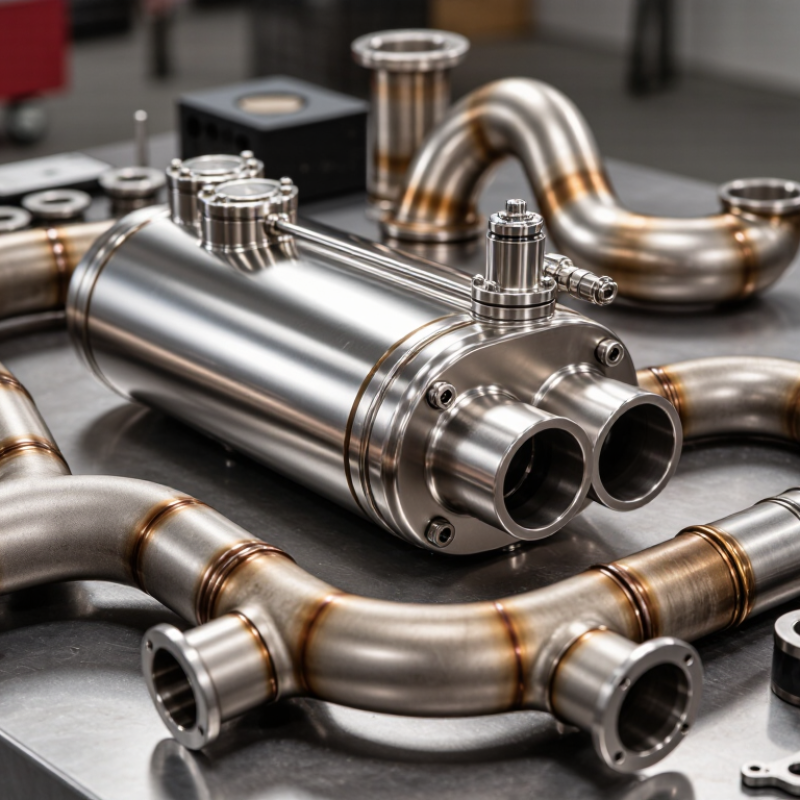
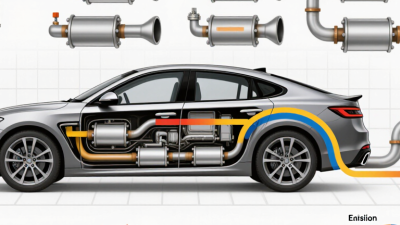
A valve exhaust system controls exhaust flow through electronically or mechanically operated valves. These valves usually sit inside the exhaust piping, often near the muffler or outlet. When the valve closes, gases follow a quieter, more restricted path. When it opens, gases use a freer route with less resistance. The actuator receives signals from the vehicle’s control system, engine speed, throttle position, or a driver-selected mode. This changes sound, response, and sometimes exhaust pressure.
In real workshop testing, valve timing matters as much as valve size. A poorly matched system may create rattling, heat buildup, or inconsistent performance. It is not magic. The engine, pipe diameter, sensors, and software must work together. Reliable manufacturers normally document materials, temperature limits, actuator protection, and testing procedures. Stainless steel can resist corrosion, but weld quality still deserves close inspection. Local noise and emissions requirements should also guide installation. Specifications can look impressive, yet real-world fitment may tell a different story.
Tips: Check valve movement before driving. Listen for hesitation or metallic noise. Inspect wiring near hot surfaces, and keep connectors protected from water. Ask for temperature ratings and service guidance. A periodic inspection can reveal carbon deposits or a weakening actuator early. Choosing the loudest setting is not always the best choice. In some vehicles, a moderate opening delivers smoother behavior and less cabin fatigue. Experiences differ, and that is worth remembering.
Comparing global valve exhaust system manufacturers requires more than checking price or catalog size. Start with engineering evidence: valve response time, flow stability, leakage rate, thermal-cycle results, and fatigue life. Ask for test conditions, not only headline figures. The International Energy Agency reported that global electric car sales exceeded 17 million in 2024, representing more than 20% of new-car sales. This shift makes combustion-system suppliers prove durability while preparing for changing vehicle platforms.
Material selection reveals practical expertise. Stainless steel grades, actuator protection, weld quality, and corrosion resistance should match the vehicle’s temperature and road environment. Manufacturers should also explain quality systems, production traceability, and failure-analysis procedures. Compliance evidence matters too. UNECE exhaust-noise requirements emphasize repeatable acoustic performance during defined operating conditions. A supplier with clear validation records is safer than one offering impressive prototypes. A spreadsheet can look convincing. It can still hide weak evidence.
Tips: Request independent laboratory reports, sample inspection records, and three-year field data. Compare warranty claims per production volume, not total claim numbers. Check whether suppliers can maintain tolerances across different factories. Site audits are useful, but they are not perfect. I would also test valves after vibration, salt exposure, and repeated hot-cold cycles. These details often expose weaknesses invisible in a showroom sample. The best comparison includes engineering support, replacement availability, software or actuator compatibility, and transparent corrective-action reports. Research from the IEA and regulatory bodies provides market context, but each manufacturer must still prove its own performance.
A practical, brand-neutral framework for evaluating global valve exhaust system manufacturers using verifiable technical, quality, compliance, and commercial criteria.
| Evaluation Dimension | Relevant Technical or Commercial Data | Recognized Reference or Industry Practice | Evidence to Request | Comparison Guidance |
|---|---|---|---|---|
| Product Scope | Exhaust valve assemblies, valve bodies, actuators, controllers, wiring, sensors, and installation components. | Product scope should be matched to the intended vehicle, engine, motorsport, powersports, or industrial application. | Current product catalogue, technical drawings, operating manuals, and application list. | Prefer suppliers able to provide a complete, compatible system rather than isolated components when integration risk is high. |
| Valve Construction | Valve material, shaft design, sealing method, weld quality, corrosion resistance, and resistance to thermal cycling. | Common exhaust materials include stainless steel grades such as 304, 316, 409, and 321, selected according to temperature and corrosion exposure. | Material certificates, heat-treatment records where applicable, dimensional drawings, and sample inspection reports. | Compare material grade and construction method together; material grade alone does not prove durability. |
| Temperature Capability | Continuous and peak temperature limits for the valve, actuator, wiring, seals, and nearby components. | Temperature performance must be validated for the complete assembly because exhaust gas, surface, and actuator temperatures differ. | Thermal test method, measured temperature locations, duty cycle, and pass/fail criteria. | Do not compare maximum temperature figures unless the test conditions and measurement points are equivalent. |
| Flow and Backpressure | Pressure drop, flow rate, valve position, pipe diameter, gas temperature, and test configuration. | Flow and backpressure are system-level results affected by pipe geometry, mufflers, catalytic devices, and valve position. | Flow-bench or engine-dynamometer data with complete test conditions and calibrated instruments. | Use test data from comparable pipe sizes and operating points; avoid relying only on marketing claims. |
| Actuator Performance | Actuation time, torque, holding force, duty cycle, ingress protection, fail-safe behavior, and allowable mounting orientation. | Actuator specifications should be evaluated against exhaust vibration, heat, moisture, and contamination exposure. | Actuator datasheet, IP test information, endurance test results, and failure-mode description. | A faster actuator is not automatically better if it has insufficient thermal protection or service life. |
| Control and Integration | Input voltage, current draw, control protocol, position feedback, manual override, diagnostics, and compatibility with the host vehicle or controller. | Automotive applications may require compatibility with vehicle electronics, diagnostic functions, and electromagnetic compatibility requirements. | Wiring diagrams, communication specifications, EMC test reports, software documentation, and integration instructions. | Evaluate total integration effort, not just the purchase price of the valve assembly. |
| Noise and Emissions Compliance | Sound level, test speed, measurement distance, valve operating mode, emissions impact, and intended market. | Relevant requirements vary by jurisdiction and vehicle category; UNECE Regulations such as R51 address vehicle noise, while emissions compliance may involve separate regulations. | Independent test reports, homologation documentation where applicable, and clearly stated application limitations. | Never treat a universal compliance claim as sufficient without confirming the destination market and vehicle category. |
| Quality Management | Quality system maturity, traceability, process controls, nonconformance management, and corrective-action capability. | ISO 9001 is a widely recognized quality-management-system standard; automotive supply chains may also require sector-specific quality expectations. | Valid certificate, certification scope, audit summary, control plan, inspection plan, and sample quality records. | Verify that the certificate covers the relevant manufacturing site and product scope. |
| Manufacturing Capability | Machining, stamping, casting, welding, coating, assembly, testing, and production-line capacity. | Critical operations performed in-house can improve control, while qualified external processes may also be acceptable when properly audited. | Process flow chart, equipment list, production capacity statement, supplier-control procedure, and factory-audit results. | Assess available capacity against forecast demand and peak-season requirements rather than nominal capacity alone. |
| Durability and Validation | Thermal cycling, vibration, corrosion, actuator cycling, leak testing, weld inspection, and environmental exposure. | Validation should reproduce the expected temperature, vibration, contamination, moisture, and operating-cycle conditions. | Validation plan, test duration, cycle count, fixtures, measured results, and failure analysis. | Compare test severity and acceptance criteria; a test duration without conditions is not meaningful. |
| Supply Reliability | Lead time, minimum order quantity, forecast flexibility, safety stock, logistics capability, and continuity planning. | Reliable supply requires documented planning for raw materials, critical components, tooling, and backup production resources. | Quoted lead time, capacity plan, business-continuity plan, delivery-performance history, and escalation contacts. | Use measured delivery performance and confirmed capacity instead of standard catalogue lead times. |
| After-Sales Support | Warranty period, replacement parts, technical response time, installation support, troubleshooting, and return procedures. | Support quality is particularly important for systems involving electronics, software, vehicle integration, or regulatory approval. | Warranty terms, service-level agreement, spare-parts list, technical-support process, and warranty-claim procedure. | Compare the cost and availability of replacement actuators, seals, wiring, and controllers over the expected service life. |
| Total Cost of Ownership | Unit price, tooling, engineering, testing, certification, installation, freight, duties, maintenance, warranty, and failure-related costs. | The lowest purchase price may not provide the lowest lifecycle cost when integration, validation, downtime, or replacement costs are included. | Detailed quotation, tooling ownership terms, engineering charges, maintenance schedule, warranty exclusions, and landed-cost calculation. | Compare suppliers using the same annual volume, delivery terms, quality requirements, and service assumptions. |
Top valve exhaust system manufacturers are increasingly shaped by regional engineering needs. In 2023, OICA recorded about 93.5 million motor vehicles produced worldwide. Asia remained the largest production center, led by strong manufacturing capacity in China, Japan, South Korea, and India. These markets favor compact valve systems, automated testing, and cost-efficient stainless-steel fabrication. European manufacturers focus more heavily on strict emissions control, thermal management, and precision actuator calibration. North American producers often prioritize high-load durability, towing performance, and aftermarket compatibility.
Market selection needs more than factory size. The IEA’s Global EV Outlook 2024 reported over 13 million electric car sales in 2023. That shift may reduce long-term demand for some traditional exhaust components. Still, hybrid vehicles and combustion models require reliable valve control for noise reduction, back-pressure management, and cold-start performance. Regional certification also matters. A supplier serving Europe may need different testing evidence than one serving Asia or North America. One weakness in many rankings is limited visibility into warranty returns and real-world corrosion results.
Tips: Compare valve-cycle testing, salt-spray hours, actuator response time, and traceability records. Ask for independent laboratory results, not only factory brochures. Check local service coverage. A cheaper unit can become expensive after repeated thermal failures. The data is useful, but never complete. Field inspection still matters.
Global valve exhaust system manufacturers compete through control, durability, and measurable emissions performance. Their strongest products combine electronic valves, pressure sensors, thermal-resistant alloys, and tuned acoustic chambers. These features help engines shift between quiet cruising and freer-flowing operation without harsh noise changes.
Precision matters.
Many current systems use closed-loop controllers that adjust valve position according to engine speed, load, temperature, and drive mode. This improves response, but calibration remains difficult.
A setting that sounds effective in a workshop may behave differently on a cold morning or steep road. Experienced engineering teams test prototypes through thermal cycling, vibration trials, corrosion exposure, and repeated road conditions.
Manufacturers serving international markets also emphasize modular construction. Replaceable actuators, standardized connectors, and compact housings can simplify installation and future servicing. Digital simulation supports airflow modeling before metal is cut, reducing waste and revealing pressure losses inside bends.
Still, simulations are not reality. Small weld variations, deposits, and aging seals can change performance over time.
Reliable producers address this gap with traceable materials, documented inspections, and endurance data from controlled testing.
Noise control remains important. Multi-stage mufflers, variable bypass paths, and active sound management can create a fuller tone while limiting harsh resonance. The best systems balance driver preference, thermal safety, consistent operation, and applicable vehicle requirements. That balance is not always perfect, especially when space and cost targets dominate.
Selecting a valve exhaust system manufacturer requires more than comparing prices. Check its experience with your vehicle type, engine output, operating temperature, and installation space. Ask for material specifications, valve-cycle data, and corrosion resistance results. Stainless steel grades, actuator quality, and weld consistency affect service life. Details matter.
Request evidence of thermal cycling, vibration, pressure, and noise testing. A reliable manufacturer should explain how each test reflects real driving conditions. Review quality certificates and production controls, not only attractive brochures. Confirm compliance with applicable emissions and noise regulations in your target market. Documentation should be clear and traceable.
Technical support can prevent expensive mistakes. Ask whether engineers provide drawings, fitting guidance, and replacement parts. Review warranty terms carefully, including exclusions and response times. Speak with existing customers about delivery accuracy and long-term performance. A low quotation may hide weak inspection procedures or limited after-sales support. I would not judge a supplier from one successful sample alone. No checklist is perfect. Leave room for independent testing, especially when the system faces winter salt, repeated heat cycles, or heavy daily use.