+86 17870576410

Global buyers comparing the 2026 Muffler Straight Pipe market need more than a list of shapes. Pipe diameter, material, wall thickness, bends, and connection style all affect fitment and durability. A polished stainless tube may suit a corrosion-prone environment, while aluminized steel can offer a practical cost balance. The right choice depends on the vehicle, operating conditions, and intended sound—not appearance alone.
Exhaust-tuning author David Vizard’s published work emphasizes matching exhaust dimensions to an engine’s operating goals. In paraphrase: “Choose the pipe for the engine’s needs, not just its look.” That principle helps buyers compare straight-through designs, mandrel-bent sections, slip-fit pipes, and vehicle-specific assemblies with clearer expectations. Small details matter. A tight bend can restrict fitment options, and an uncertain inlet measurement can turn a promising order into a costly mismatch.
This guide reviews leading Muffler Straight Pipe types for global purchasing teams, including their materials, common configurations, selection criteria, and questions to confirm with suppliers. Ask for dimensional drawings, material specifications, and sample inspection details before placing a large order. One caution: catalog descriptions do not always reveal weld quality or actual wall thickness. Verify those points. Product suitability varies by application, so technical checks remain essential.
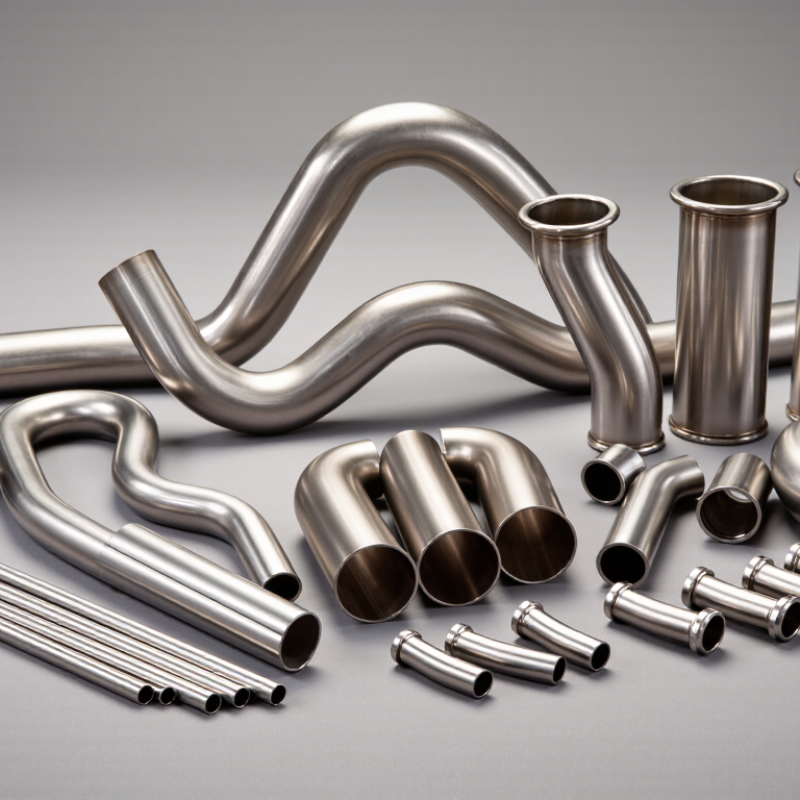
A muffler straight pipe is an exhaust section with no muffler to slow or soften sound waves. It carries hot exhaust gases from the engine toward the tailpipe. The pipe may still bend around the chassis, and other exhaust components may remain. “Straight” describes the simpler, less-restricted path, not necessarily a ruler-straight tube.
Each combustion event sends pressure pulses through the exhaust. A conventional muffler uses chambers, perforated tubes, or sound-absorbing material to reduce those pulses. Removing it usually makes the exhaust louder and changes its tone. It does not guarantee more power; pipe diameter, engine tuning, and the rest of the system matter. Not quite a simple upgrade. A poor fit can also create leaks or unwanted resonance.
The World Health Organization’s 2018 Environmental Noise Guidelines recommend road-traffic exposure below 53 dB Lden and 45 dB Lnight. These are community exposure recommendations, not a direct measurement of one vehicle’s tailpipe. Still, they show why sound deserves careful attention. A practical check is to inspect joints for soot marks, listen for rattling, and compare sound levels under consistent conditions. One detail is often overlooked: louder does not automatically mean better-performing.
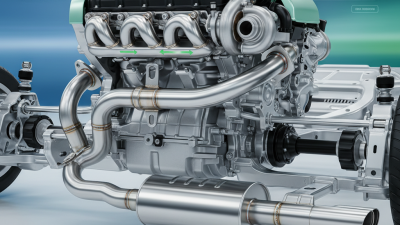
In 2026, buyers will find several straight-through muffler designs, each built around a relatively open exhaust path. A perforated-core type uses a tube with small holes, surrounded by sound-absorbing packing. Exhaust passes through with less obstruction, while the packing softens some sound. A louvered-core version has angled openings that guide sound into the surrounding material. It can offer a different balance of tone and flow. The details matter. Core diameter, shell length, and packing density all affect sound and fit.
Some models use fiberglass packing; others use stainless-steel wool or layered materials designed for heat exposure. A resonated straight-through muffler adds a chamber or resonator to reduce harsh frequencies without using a traditional maze of baffles. Buyers may also see compact, round, or oval housings, which suit different underbody clearances. Check inlet and outlet dimensions, connection style, body length, and material grade against the vehicle’s available space. A tape measure helps. Catalog terms are not always consistent, so confirm construction drawings or sample specifications before ordering. Sound and emissions requirements vary by location; a low-restriction design is not automatically suitable for every vehicle or use.
2026 Top Muffler Straight Pipe Types for Global Buyers?
How Do Materials and Construction Affect Pipe Performance?
Material choice shapes a straight pipe’s weight, corrosion resistance, and service life. Aluminized steel can suit cost-conscious projects, while stainless steel generally handles moisture and heat cycles better. The exact grade matters, though. A label alone does not reveal wall thickness or weld quality. Look closely at the seams.
Construction changes how the pipe fits and performs. A smooth, mandrel-bent tube is less likely to narrow at bends than one with visible creases. Diameter should match the intended system; larger is not automatically better. Some straight-through designs use a perforated core and sound-absorbing packing. Packing can wear over time, especially under repeated heat. Small details count. A slightly misaligned inlet can make installation frustrating, even when the pipe itself is well made.
Tips: Compare material grade, measured wall thickness, bend shape, and weld consistency. Ask for dimensions and inspect a sample when practical. Check clearances against the vehicle before ordering. This step is easy to skip. I would not judge durability from a polished finish alone; real-world corrosion also depends on climate, storage, and maintenance.
| Straight-Through Type | Typical Materials | Construction Details | Sound and Flow Characteristics | Corrosion Resistance and Service Considerations | Common Buyer Applications |
|---|---|---|---|---|---|
| Perforated-Core, Packed Muffler | Aluminized carbon steel, 409 stainless steel, or 304 stainless steel | A perforated inner tube runs through an outer shell. Fiberglass or mineral-fiber packing surrounds the core; common wall thicknesses vary by design, often around 1.0–1.5 mm. | Allows relatively direct exhaust flow while the packing absorbs sound. Usually produces a smoother, less sharp tone than an open, un-packed pipe. | Aluminized steel is a lower-cost option but can corrode if its coating is damaged. 409 stainless offers better general exhaust-system durability; 304 stainless provides stronger resistance to moisture and road-salt corrosion. Packing can degrade over time. | Passenger vehicles, light trucks, and general replacement or performance exhaust systems where reduced noise is desired without a heavily baffled design. |
| Louvered-Core, Packed Muffler | Aluminized carbon steel or stainless steel, commonly 409 or 304 | The core has inward-facing louvers rather than round perforations, increasing contact between exhaust sound waves and the surrounding packing material. | Can offer effective sound absorption with a straight-through path. Performance depends on core diameter, louver geometry, packing density, and overall muffler size. | Material selection determines most of the corrosion performance. Louvers and packing should be specified for the expected exhaust temperature and duty cycle. | Road vehicles and custom systems seeking a moderate exhaust tone and a compact straight-through muffler layout. |
| Resonated Straight-Through Muffler | 409 or 304 stainless steel; aluminized steel is also used in cost-sensitive systems | A straight-through core is combined with a tuned resonator chamber or resonating section designed to reduce selected sound frequencies. | Maintains a relatively direct gas path while targeting particular tones, such as cabin drone. Results depend on system length, pipe diameter, engine characteristics, and installation. | Stainless constructions generally suit wet or corrosive environments better than coated carbon steel. Resonator dimensions should match the intended application. | Street vehicles where buyers want a freer-flowing layout but need better control of specific exhaust frequencies. |
| Open, Un-Packed Straight Pipe | Carbon steel, aluminized steel, or stainless steel | A plain tube with no sound-absorbing packing or internal muffling elements. It may be straight or formed to follow the vehicle’s exhaust route. | Offers a simple, unobstructed passage, but typically creates substantially more exhaust noise than a packed muffler. Sound character varies with the engine and full exhaust system. | Durability depends on material, wall thickness, weld quality, drainage, and exposure to heat and road conditions. A straight pipe is not a substitute for required emissions-control equipment. | Off-road, competition, or other applications where permitted. Buyers should check local noise and emissions regulations before use on public roads. |
| Mandrel-Bent Straight-Through Pipe or Muffler Assembly | 409 or 304 stainless steel, aluminized carbon steel, or carbon steel | Mandrel bending keeps the tube’s cross-section more consistent through bends than many conventional bends. It can be used with either a plain tube or a straight-through muffler. | Helps avoid the pronounced narrowing that can occur in tight bends, supporting consistent flow area. Actual flow still depends on diameter, bend radius, surface transitions, and the rest of the system. | Choose the alloy and coating for the climate and vehicle duty. Smooth, well-finished bends and sound welds help reduce stress concentrations and leakage risk. | Custom exhaust routing, replacement systems, and performance-oriented applications that require bends without substantial tube flattening. |
| Thin-Wall Titanium Straight-Through Assembly | Titanium alloy, with grade and specification varying by supplier | Uses lightweight tubing and may incorporate a perforated core with sound-absorbing packing. Fabrication and joining require processes suited to titanium. | Low mass can benefit weight-sensitive builds. Sound and flow behavior are governed mainly by the muffler’s core, packing, dimensions, and system layout—not by the material alone. | Titanium can provide a favorable strength-to-weight ratio and corrosion resistance, but typically has a higher material and fabrication cost. Verify alloy, wall thickness, joining quality, and temperature suitability. | Weight-conscious competition, specialty, or premium custom systems where the cost is justified by the application. |
Selection note: These are general construction comparisons, not guaranteed product specifications. Confirm dimensions, material grade, wall thickness, temperature rating, fitment, and applicable noise and emissions requirements with the supplier and local authorities.
Pipe diameter should follow engine airflow, vehicle mass, and the original exhaust layout—not appearance alone. A simple area calculation shows why small changes matter: a 3-inch internal diameter provides about 44% more cross-sectional area than a 2.5-inch pipe. That does not guarantee better performance. Oversizing can reduce gas velocity, while restrictive bends or crushed sections can undermine a correctly sized pipe. Measure the actual inside diameter, wall thickness, flange position, and hanger spacing; nominal sizes may not match the usable opening.
Fitment varies by application. A compact car may need tight bends and limited clearance near the floorpan, while a heavy-duty vehicle often uses larger tubing and longer supports. Check the pipe route against suspension travel, heat shields, and nearby wiring. Keep required emissions-control equipment in place. A neat chart can still mislead. The U.S. EPA’s 2024 Automotive Trends Report gives model-year 2023 new vehicles an average fuel economy of 27.1 mpg, but that fleet figure cannot determine an individual pipe size. Use the vehicle’s service specifications and measured connection points instead. Then verify clearance with the vehicle at normal ride height. Small details matter.
Global buyers should compare fitment, material, diameter, bend shape, and intended use—not just price. OICA’s 2023 production report recorded 93.5 million motor vehicles worldwide, reflecting wide variation in vehicle platforms and configurations. A pipe that matches the outlet diameter may still conflict with hangers, axle clearance, or sensor placement. Measure the original pipe and check the vehicle’s year, engine, and chassis before ordering. Small mismatch, big headache.
Material matters in wet climates and on vehicles exposed to road salt. Aluminized steel can suit cost-conscious projects, while stainless steel generally offers stronger corrosion resistance; grade and wall thickness still matter. Compare outer diameter and wall thickness, since a thin tube may dent during installation. Ask for bend and overall-length measurements, not a catalog photo alone. IEA’s Global EV Outlook 2024 reports nearly 14 million electric car sales in 2023, underscoring how quickly vehicle powertrains are diversifying. Verify that a part is intended for the specific combustion vehicle and check applicable noise and emissions requirements. Sound preference is subjective. I would still treat advertised performance gains cautiously: pipe dimensions alone cannot predict results without engine and test data.
Typical design features by configuration. Bars show whether a feature is generally present (1) or absent (0); actual products vary. Check local noise and emissions rules, vehicle fitment, materials, and dimensions before buying.